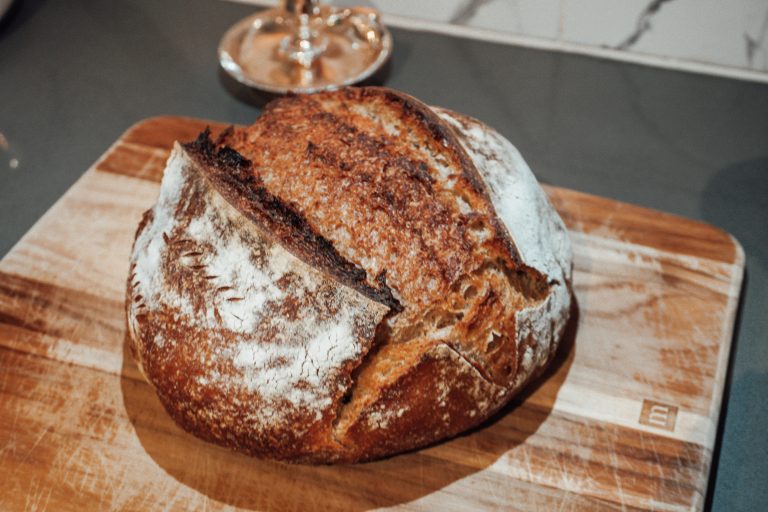
What Is Gluten? (And How It Works in Fresh Milled Flour)
Last Updated on February 25, 2026 by Gabby Hatten
Gluten is one of the most talked-about, and least understood, parts of bread baking. You will hear people say a dough needs “strong gluten” or that whole wheat has “weaker gluten,” but rarely is it explained in a simple, practical way.
If you are baking with fresh milled flour, understanding gluten is one of the most helpful things you can do. It explains why dough stretches, why bread rises, and why whole grain loaves behave differently than those made with white flour.
The good news is that gluten is not mysterious or complicated. It is simply structure.
What Gluten Actually Is
Gluten is formed when two proteins found in wheat — glutenin and gliadin — combine with water.
When flour is mixed with liquid:
- Glutenin provides strength and elasticity
- Gliadin provides stretch and extensibility
- Together they create a flexible network
This network traps the gases produced by yeast or sourdough fermentation, allowing bread to rise and hold its shape.
Without gluten development, dough cannot trap air effectively. The result is flat or dense bread.
Why Gluten Matters in Bread Baking
Gluten is responsible for:
- Dough elasticity
- Structure and shape
- Oven spring
- Open crumb
- Ability to hold gas during fermentation
You can think of gluten as the internal scaffolding of a loaf.
Why Fresh Milled Flour Behaves Differently
Fresh milled flour contains the entire grain, including bran and germ. These components are incredibly nutritious, but they change how gluten develops.
Bran Interrupts Gluten
Bran pieces act like tiny blades that cut through gluten strands as the dough forms. This makes it harder to build the same smooth network you get with refined flour.
Natural Oils Affect Structure
Fresh flour still contains the grain’s oils, which can soften gluten and change dough texture.
Hydration Becomes More Important
Because bran absorbs so much water, gluten cannot form properly if the dough is too dry. Adequate hydration is essential for strong structure.
Strong Gluten vs Weak Gluten
Not all flours produce the same strength of gluten.
Stronger gluten comes from:
- Hard wheat varieties
- Higher protein content
- Proper hydration
- Sufficient mixing and rest
Weaker gluten comes from:
- Soft wheat
- Ancient grains like einkorn
- Low hydration
- Minimal development
This is why grain choice matters so much in fresh-milled baking.
How Gluten Develops in Dough
Gluten strengthens over time through:
- Mixing or kneading
- Hydration
- Resting (autolyse)
- Stretch and folds
- Fermentation
You do not need aggressive kneading to develop gluten, especially with whole grain dough. Gentle strength-building techniques often work better.
Signs of Well-Developed Gluten
When gluten is properly developed, dough will:
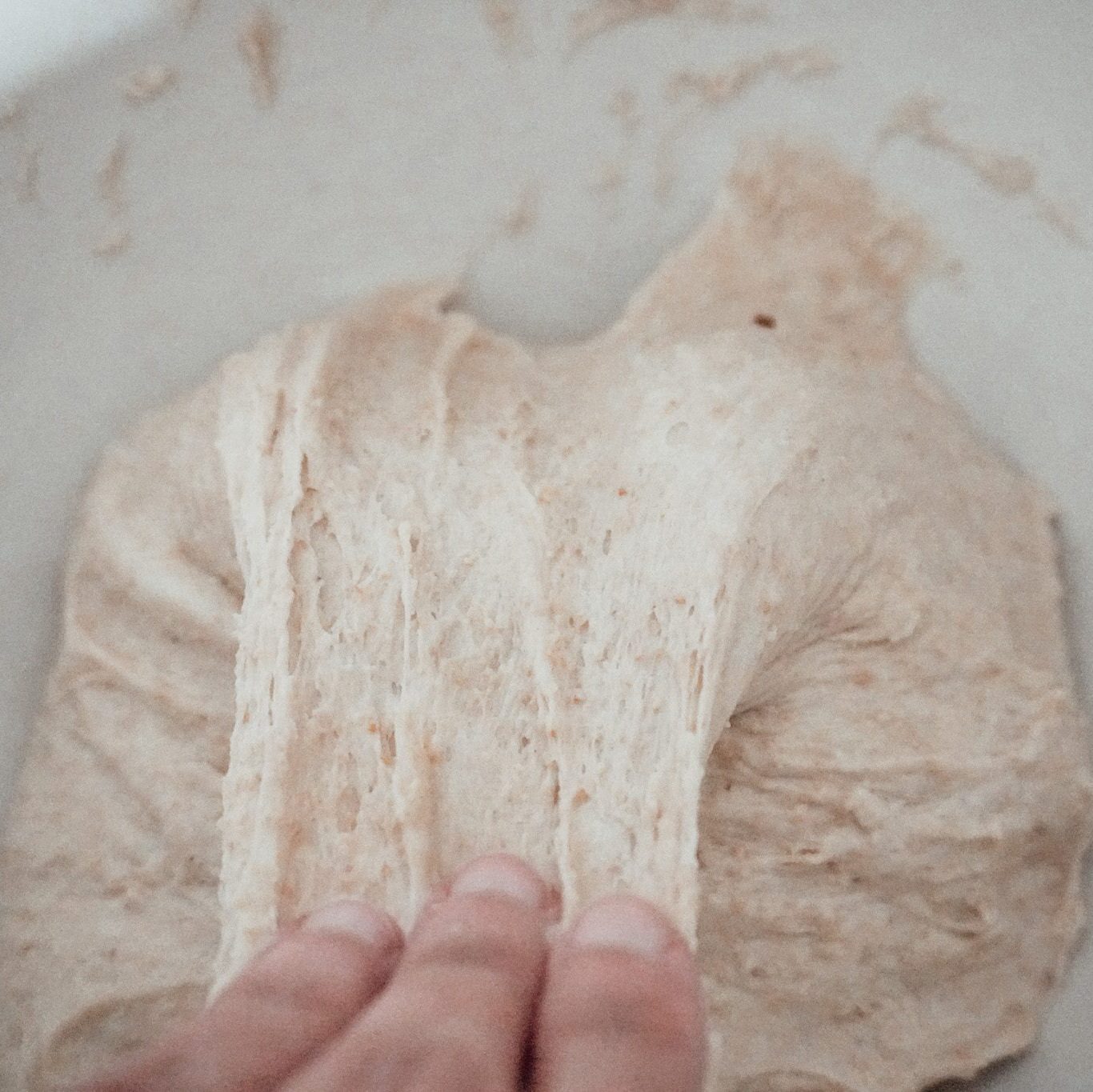
- Stretch without tearing
- Feel elastic and cohesive
- Hold its shape
- Pass the “windowpane” test (stretch thin without breaking)
This does not mean the dough will feel dry or firm. Well-hydrated dough can still be soft and tacky.
Signs of Weak Gluten Development
Weak gluten often shows up as:
- Dough that tears easily
- Dough that spreads instead of rising
- Dense finished bread
- Poor oven spring
The solution is not always more flour. Often it is more hydration, rest, or gentle strengthening.
Whole grain baking requires a shift in expectations. Fresh milled flour will not behave exactly like store-bought white flour, and that is not a flaw. It is simply a different starting point.
With hydration, time, and gentle handling, strong structure is absolutely possible. Many bakers find their loaves improve dramatically once they understand how gluten works rather than guessing.
What to Learn Next
If you are working to improve your bread results, these topics pair well with this guide:
- Why fresh milled bread is dense (and how to fix it)
- How to build strong gluten in whole grain dough
- Autolyse and resting techniques
- Best grains for sourdough bread
- Hard white vs hard red wheat
Understanding gluten gives you control. Instead of hoping your bread will turn out, you begin to shape the outcome intentionally.
Author Profile

- Hello there, I'm Gabby! I'm a mom of four, married to my wonderful husband Marco, and I have a deep passion for simple living, vintage homes, and cooking everything from scratch! Although I grew up in Las Vegas, my husband's military service brought us to the east coast, where we have now made coastal North Carolina our home. While I didn't grow up on a farm, I have always been fascinated by that lifestyle and have dedicated my adult life to learning and embracing those skills, which I am excited to share with all of you!
Latest entries
 ☦️ Liturgical LivingNovember 3, 2026Living Liturgically Without Overwhelm: Finding a Gentle Rhythm in Orthodox Family Life
- ☦️ Liturgical LivingNovember 3, 2026November Orthodox Morning Board: 30 Days of Saints, Vocabulary & History
- FallOctober 20, 2026From-Scratch Pumpkin Pie with Fresh Milled Flour Crust
- Fresh-Milled FlourOctober 20, 2026Easy Fresh Milled Flour Pie Crust (Food Processor Method)