The Truth About Farm Fresh Eggs: Why We Don’t Wash Ours (and What the “Bloom” Really Is)
Last Updated on April 16, 2026 by Gabby Hatten
From Coop to Kitchen
There’s nothing better than gathering fresh, colorful eggs each morning.
Still warm from the nest.
Tucked into straw.
Laid by hens you care for.
But if you’ve ever picked up a carton of farm fresh eggs, you might have noticed something different…
They’re not washed.
And that can feel a little… surprising at first.
Let’s talk about why.
What Is the “Bloom” on Eggs?
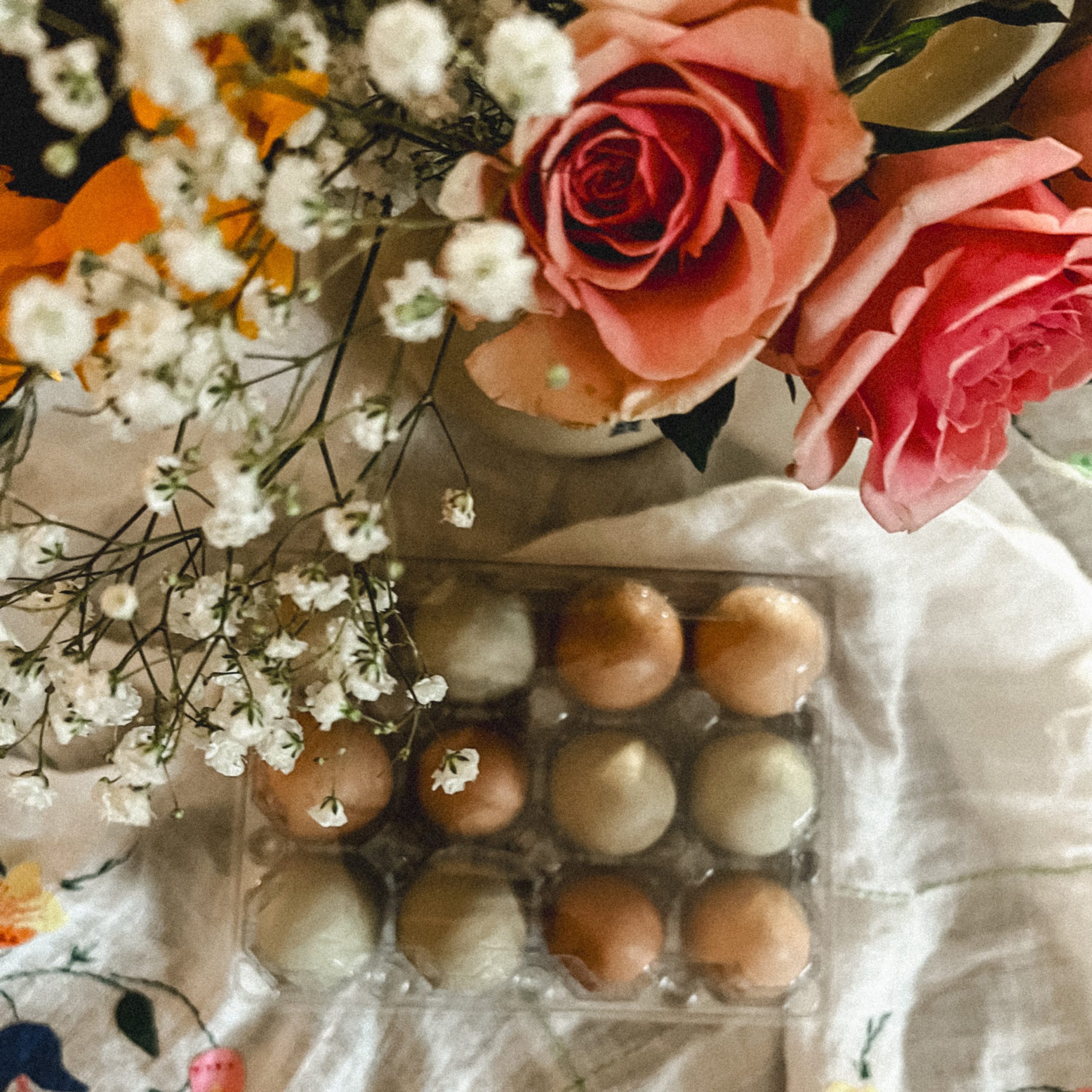
When a hen lays an egg, it’s coated in a natural protective layer called the bloom (also known as the cuticle).
This bloom:
- Seals the tiny pores in the eggshell
- Helps block bacteria from entering
- Locks in moisture and freshness
It’s the egg’s built-in protection system
Why We Don’t Wash Our Eggs
When you wash an egg, you remove that protective bloom.
That means:
- The egg becomes more vulnerable to bacteria
- It needs to be refrigerated immediately
- It won’t last as long
So on our homestead, we leave eggs unwashed until we’re ready to use them.
It’s simple. It’s traditional. And it works.
Do Unwashed Eggs Need to Be Refrigerated?
Here’s where things get interesting:
- Unwashed eggs (with bloom intact):
👉 Can be stored at room temperature for a time - Washed eggs:
👉 Must be refrigerated
In the U.S., store-bought eggs are always washed, which is why refrigeration is required.
On the homestead, you have a choice.
Benefits of Farm Fresh Eggs
There’s a reason so many families make the switch.
1. Better Flavor
Richer, deeper taste—especially in baked goods and breakfasts.
2. Vibrant Yolks
Those golden (sometimes deep orange!) yolks come from a varied, natural diet.
3. Freshness You Can See
- Thick whites
- Yolks that stand tall
- No watery consistency
4. Transparency
You know exactly how your chickens are raised.
When SHOULD You Wash Eggs?
We don’t ignore cleanliness—we’re just intentional about timing.
You should wash eggs:
- Right before cracking and using
- If they are visibly dirty
- Before selling (depending on local laws)
Use warm water (not cold!) to avoid drawing bacteria inside.
A Gentle Note on Safety
Farm fresh eggs are wonderful—but they should still be handled with care.
- Always wash before use
- Store properly
- Discard any cracked or questionable eggs
If you’re serving:
- Elderly
- Pregnant women
- Young children
Be extra mindful with preparation (fully cooked is safest)
A Return to Simpler Ways
For generations, families gathered eggs from their own backyard without overcomplicating things.
The bloom…
The rhythm of daily collection…
The connection to your food…
It’s all part of a slower, more intentional way of living.
And once you experience it, it’s hard to go back.
From Our Homestead to Yours
Here at Hatten Homestead, our eggs are:
- Free range
- Unwashed
- Collected daily
Just as they were meant to be 🤍
New to Chickens? We Cover It All
-
The Truth About Roosters: Temperament, Aggression, and When It’s Time to Let Go
Last Updated on April 8, 2026 by Gabby Hatten If you’ve spent any time in the backyard chicken world, you’ve probably heard both sides: And the truth is…both can be true Some roosters are calm, watchful, and gentle. Others can turn aggressive—and fast. I’ve lived both sides of this. We kept a mean rooster far…
-
Frugal Chick Brooder Set Up Using a Dog Crate {Simple & Budget Friendly}
Last Updated on March 7, 2026 by Gabby Hatten This post may contain affiliate links. As an Amazon Associate I earn from qualifying purchases. Bringing home baby chicks is one of the sweetest parts of homestead life. Those tiny cheeps, fluffy feathers, and curious little personalities are hard to resist. In our case, my husband…
-
How Soon Do Easter Eggers Lay Eggs + Signs to Know
Last Updated on January 23, 2026 by Gabby Hatten If you’re raising Easter Eggers for the first time, the waiting can feel endless. You bring home those tiny fluff balls, set up the brooder, buy the feed… and then months later you’re still peeking into the nesting boxes wondering when those beautiful blue and green eggs will…
-
My Chickens Stopped Laying Eggs, Now What?
Last Updated on January 23, 2026 by Gabby Hatten Chickens are the funniest little feathered friends who also provide us with fresh eggs daily. But what happens when your feathered friends stop laying? It’s a common problem that can leave chicken owners scratching their heads. There are many reasons chickens might stop laying eggs, including…
-
How Do Chickens Produce Eggs: A Look at the Egg-Making Process
Last Updated on January 23, 2026 by Gabby Hatten Chickens are remarkable creatures, capable of producing one of nature’s most versatile foods – eggs. The process of egg formation is a fascinating biological marvel that occurs daily in hens. Chickens lay eggs through a complex reproductive system that develops and releases an egg approximately every 24…
-
When Do Easter Egger Chickens Start Laying Eggs? A Simple Guide for Backyard Farmers
Last Updated on January 23, 2026 by Gabby Hatten Easter Egger chickens are beloved for their colorful eggs and friendly personalities. These unique hybrid birds bring excitement to backyard flocks with their varied plumage and egg hues. Many chicken keepers eagerly await their first Easter Egger eggs. Easter Egger chickens typically start laying eggs between…




Author Profile

- Hello there, I'm Gabby! I'm a mom of four, married to my wonderful husband Marco, and I have a deep passion for simple living, vintage homes, and cooking everything from scratch! Although I grew up in Las Vegas, my husband's military service brought us to the east coast, where we have now made coastal North Carolina our home. While I didn't grow up on a farm, I have always been fascinated by that lifestyle and have dedicated my adult life to learning and embracing those skills, which I am excited to share with all of you!
Latest entries
 ☦️ Liturgical LivingNovember 3, 2026Living Liturgically Without Overwhelm: Finding a Gentle Rhythm in Orthodox Family Life
- ☦️ Liturgical LivingNovember 3, 2026November Orthodox Morning Board: 30 Days of Saints, Vocabulary & History
- FallOctober 20, 2026From-Scratch Pumpkin Pie with Fresh Milled Flour Crust
- Fresh-Milled FlourOctober 20, 2026Easy Fresh Milled Flour Pie Crust (Food Processor Method)