Living Liturgically Without Overwhelm: Finding a Gentle Rhythm in Orthodox Family Life
Last Updated on November 3, 2026 by Gabby Hatten
Learning to embrace the Church calendar, one small tradition at a time.
As we approach the Nativity Fast, I’ve found myself thinking about what it really means to live liturgically as an Orthodox family.
There is so much beauty in the Orthodox Church. The feast days, the fasting seasons, the lives of the saints, the prayers, and the traditions that have been passed down through generations.
And as a relatively new convert to Orthodoxy, I want to soak up every bit of it.
I want my children to grow up knowing the saints as familiar friends. I want our home to reflect the changing seasons of the Church. I want them to remember the smell of incense, the glow of candles in our prayer corner, and the special meals and traditions that accompany our favorite feast days.

But if I’m being truthful, sometimes that desire to embrace everything can become a little overwhelming.
Especially when you’re homeschooling, raising little ones, keeping a home, and managing all the ordinary responsibilities of family life.
With the Nativity season approaching, I think it’s worth reminding ourselves that living liturgically isn’t about doing everything. It’s about allowing the life of the Church to slowly shape the life of our homes.
The Temptation to Do Everything
One of the most beautiful things about Orthodoxy is that there is seemingly always something to commemorate.
Every day brings another saint to learn about. Throughout the year, we encounter feasts, fasting periods, special services, and traditions that invite us to participate more fully in the life of the Church.
For someone who loves homeschooling and creating meaningful family traditions, this can feel like an endless source of inspiration.
There are books to read, recipes to prepare, icons to display, crafts to make, and beautiful ways to bring the Church calendar into our everyday routines.
And with social media, it’s easier than ever to see how other Orthodox families celebrate.
One family might bake a beautiful feast-day bread. Another might create an elaborate lesson about a beloved saint. Someone else has a perfectly organized liturgical calendar, complete with activities and traditions for every occasion.
These things can be wonderful sources of inspiration.
But they can also leave us feeling as though we’re falling behind.
As though we’re somehow missing the mark if we don’t have a special activity planned for every feast day.
I’ve had to remind myself that the purpose of living liturgically isn’t to create an endless list of things to accomplish.
Our homes are not meant to become another place where we measure our spiritual lives by productivity.
Living Liturgically Is a Rhythm, Not a Checklist
Something I’ve come to appreciate about the Orthodox faith is its rhythm.
There are seasons of fasting and seasons of feasting. Times of preparation and times of celebration. Ordinary days and extraordinary ones.
And all of these things work together to gently orient our lives toward Christ.
But rhythms take time to establish.
We don’t expect our children to master reading after a single lesson, or our gardens to produce a harvest the day after planting.
Why, then, do we sometimes expect ourselves to immediately master centuries of beautiful Orthodox traditions?
As converts, we’re learning an entirely new way of experiencing the Christian year.
And even for those who have been Orthodox their entire lives, family circumstances change. Babies are born, children grow, responsibilities shift, and what once worked beautifully may need to look different for a season.
Some years, you might have the time and energy to prepare special foods, read lengthy stories, and create meaningful activities around feast days.
Other years, simply making it to church with everyone dressed and fed feels like an accomplishment.
Both seasons are part of family life.
The important thing is not how much we’re able to fit into our days, but that we continue returning to Christ.
Start With the Life of the Church
One thing I want to be careful about as we establish traditions in our home is remembering that our domestic practices are meant to support our participation in the Church, not replace it.
It’s easy to become caught up in the beautiful things we can do at home.
But the center of our Orthodox life is not the perfectly curated morning basket, the feast-day craft, or the special recipe.
It’s Christ.
It’s the Divine Liturgy, the prayers of the Church, repentance, and the sacramental life we’re invited to participate in.
Our little traditions at home should point us back toward these things.
For our family, that might look like learning about a saint during our homeschool morning, saying our prayers together, or preparing a simple meal that reflects the fasting season.
None of these things need to be elaborate to be meaningful.
And when we’re unsure how to approach fasting or other aspects of Orthodox life, especially during pregnancy, nursing, illness, or demanding family seasons, we can seek guidance from our priest rather than trying to figure everything out ourselves.
Bringing the Church Calendar Into Our Homeschool
Homeschooling has given our family a particularly lovely opportunity to incorporate the liturgical year into our everyday learning.
I love the Charlotte Mason philosophy of surrounding children with beautiful, living ideas and allowing their natural curiosity to flourish.
And I think learning about the saints fits so naturally into that approach.
We don’t need an elaborate unit study for every commemoration.
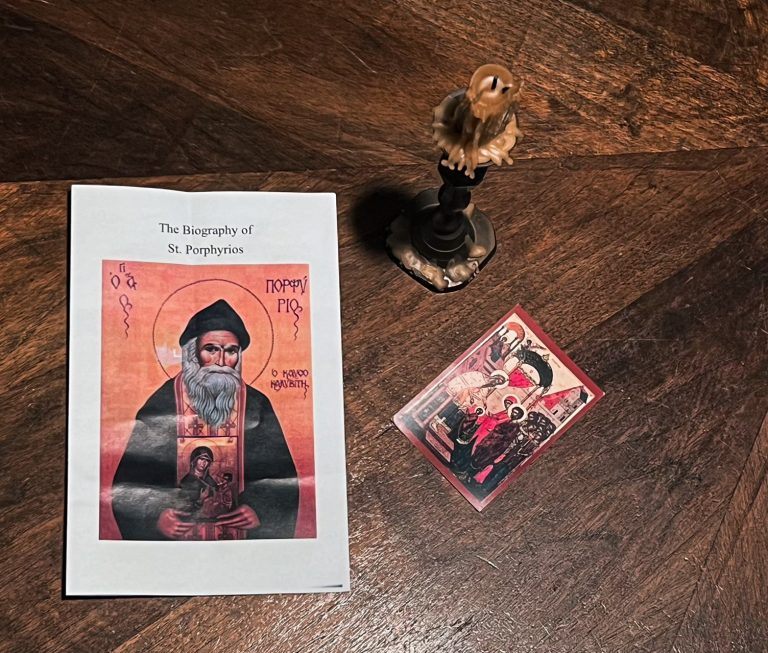
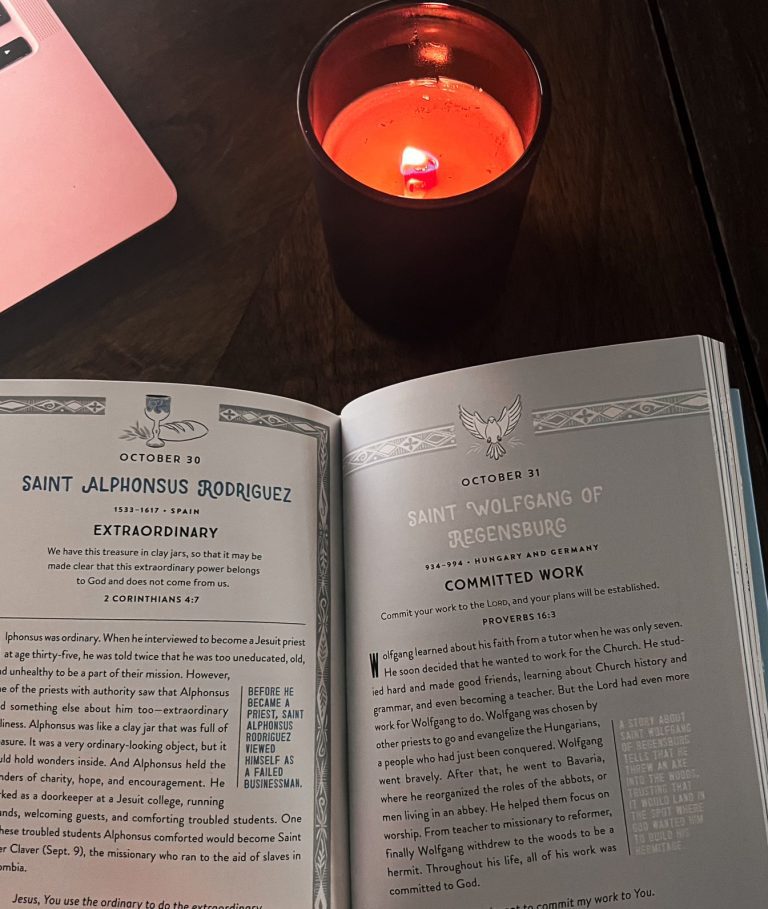
Sometimes we simply read a short account of a saint’s life, look at an icon together, and talk about what we can learn from their example.
Other times, a particular saint or feast captures my children’s interest, and we spend more time exploring it.
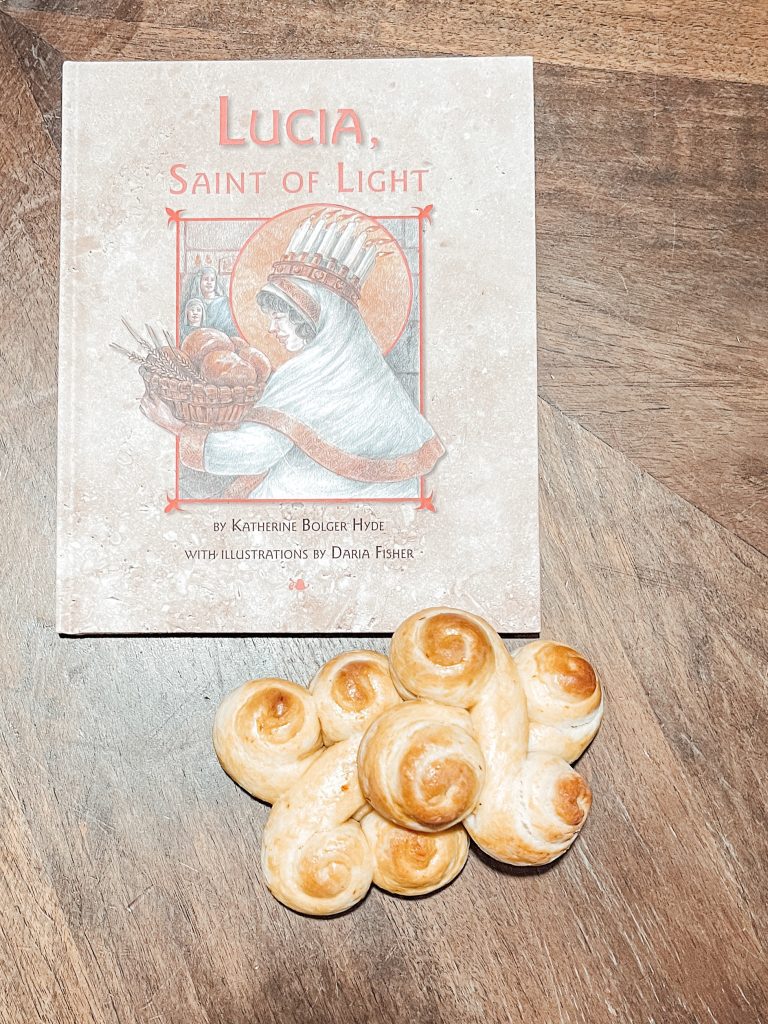
We might read a related book, learn about the place where a saint lived, or prepare a traditional food.
I’ve been working on incorporating these little lessons into our morning rhythm through our Orthodox Morning Board.
It’s a simple way for us to explore the saints, vocabulary, and history together without feeling like we need to create something entirely new every day.
And if we miss a day?
We simply begin again the next morning.
There is no catching up required.
Preparing Our Hearts for the Nativity Fast
As the Nativity Fast begins on November 15, I know how easy it can be to get caught up in the busyness of the approaching Christmas season.
There are gifts to consider, meals to plan, family gatherings, church services, and all the ordinary responsibilities that don’t disappear simply because we’re entering a season of preparation.
But the Nativity Fast offers us something different from the hurried pace of the world around us.
An invitation to prepare our hearts for the coming of Christ.
And I think that preparation can begin with small, intentional changes.
Perhaps we become a little more consistent with our family prayers.
Maybe we choose a few meaningful books to read together throughout the season.
We might simplify our meals, practice generosity, or make a greater effort to attend the services of the Church when we’re able.
Rather than creating a long list of traditions we feel obligated to accomplish, we can choose a few things that genuinely help our families turn toward Christ.
The Nativity Fast isn’t a competition to see who can create the most beautiful Advent experience.
It’s a season of prayer, fasting, repentance, and preparation.
And those things often happen most meaningfully in the quiet, ordinary moments of our days.
Choose a Few Traditions and Let Them Grow
One thing I’ve been thinking about lately is the importance of allowing family traditions to develop naturally.
I don’t want to feel pressured to create every tradition all at once.
I’d rather choose a handful of meaningful practices, repeat them year after year, and allow them to become part of our family’s story.
Maybe this year we focus on establishing a consistent prayer rhythm and learning about a few saints connected to the Nativity season.
Next year, perhaps we add a special recipe or another book.
Over time, those small practices become familiar.
Our children begin to anticipate them.
They remember the stories, the smells, the prayers, and the little things that make each season distinct.
And eventually, those traditions become something they may carry into their own homes.
That, to me, is far more meaningful than trying to fit everything into a single year.
Giving Ourselves Grace in Busy Seasons
There are days when our home feels peaceful and our routines unfold beautifully.
And there are days when someone is sick, the baby needs extra attention, the kitchen is a mess, and our carefully planned morning never quite happens.
This is real family life.
I think it’s important to remember that raising children, caring for our homes, and serving the people God has placed in our lives are not interruptions to living faithfully.
They’re part of the very life in which we’re called to practice our faith. Motherhood is a form of asceticism.
Of course, that doesn’t mean we abandon prayer or the traditions of the Church whenever life becomes difficult.
But it does mean we can approach our responsibilities with humility, seek guidance when we need it, and recognize that different seasons of life may require different approaches.
Sometimes living liturgically looks like a beautiful feast-day celebration.
Sometimes it looks like whispering the Jesus Prayer while rocking a restless baby.
Both can be opportunities to turn our hearts toward God.
A Gentle Beginning Is Still a Beginning
If you’re new to Orthodoxy, newly exploring the liturgical calendar, or simply trying to establish a more intentional rhythm in your home, I hope you’ll remember this:
You don’t have to do everything this year.
You don’t have to know every saint, memorize every feast, or have a special activity prepared for every day.
Begin with the life of your parish.
Begin with prayer.
Learn about the saints who capture your family’s hearts.
Choose a few traditions that fit naturally into your season of life.
And allow the rest to grow with time.
As we enter this Nativity season, my hope is not that our family will accomplish more, but that we’ll become a little more attentive to the beautiful gift of Christ’s coming.
A little more prayerful.
A little more generous.
A little more present.
And perhaps a little less concerned with making everything perfect.
Because living liturgically is not about creating a picture-perfect Orthodox home.
It’s about slowly learning to make room for Christ in the home we already have.
Author Profile

- Hello there, I'm Gabby! I'm a mom of four, married to my wonderful husband Marco, and I have a deep passion for simple living, vintage homes, and cooking everything from scratch! Although I grew up in Las Vegas, my husband's military service brought us to the east coast, where we have now made coastal North Carolina our home. While I didn't grow up on a farm, I have always been fascinated by that lifestyle and have dedicated my adult life to learning and embracing those skills, which I am excited to share with all of you!
Latest entries
 ☦️ Liturgical LivingNovember 3, 2026Living Liturgically Without Overwhelm: Finding a Gentle Rhythm in Orthodox Family Life
- ☦️ Liturgical LivingNovember 3, 2026November Orthodox Morning Board: 30 Days of Saints, Vocabulary & History
- FallOctober 20, 2026From-Scratch Pumpkin Pie with Fresh Milled Flour Crust
- Fresh-Milled FlourOctober 20, 2026Easy Fresh Milled Flour Pie Crust (Food Processor Method)