Incorporating Holy Orthodoxy Into Your Homeschool Rhythm With Beautiful Books
Last Updated on June 29, 2026 by Gabby Hatten
When I first began homeschooling, my approach was a little bit of everything.
Like many new homeschool moms, I pieced together different curriculums, printable packs, YouTube videos, and unit studies until I found what worked for our family. Every year looked a little different, and every year taught me something new.
As our children have grown, though, so has my philosophy of education.
If you’ve read my post on Why We’re Changing Our Homeschool Curriculum for 2026, then you already know that this year marks a significant shift for our family. Rather than continuing our eclectic approach, we’re leaning wholeheartedly into a Charlotte Mason philosophy. We’re choosing living books over dry textbooks, cultivating habits over checking boxes, embracing wonder over worksheets, and focusing on educating the whole child rather than simply completing assignments.
At the very same time, another beautiful transformation has been taking place in our home.
Our family was received into the Holy Orthodox Church, and our faith has begun shaping every area of our lives, including the way we homeschool.
The more I’ve learned about Charlotte Mason’s philosophy, the more I’ve been struck by how naturally it complements the Orthodox understanding of education. Both recognize that children are whole persons created in the image of God. Both invite us to slow down, seek truth, cultivate virtue, and surround ourselves with beauty. Neither views education as merely the accumulation of facts. Instead, both see it as the lifelong formation of the heart, mind, and soul.
That doesn’t mean our homeschool is an “Orthodox curriculum.”
It means our faith has become the atmosphere in which all of our learning takes place.
We begin our mornings in prayer before our icons. We read the lives of the saints alongside classic literature. We celebrate feast days as naturally as the changing seasons. We spend time outside marveling at God’s creation. We read beautiful books that stir the imagination and point our children toward truth, goodness, and beauty.
Holy Orthodoxy isn’t another subject we’ve added to an already full homeschool day.
It’s become the foundation beneath everything else.
One of the questions I receive most often is, “How do you actually incorporate Orthodoxy into your homeschool?”
The good news is that it doesn’t require an expensive curriculum or a perfectly curated homeschool room. Many of the most meaningful changes we’ve made have been simple, inexpensive, and woven naturally into the rhythms we were already creating.
In this post, I’m sharing exactly how we’re building an Orthodox homeschool through beautiful books, the liturgical calendar, morning baskets, living ideas, and some of my favorite resources that have blessed our family along the way.
My hope is that you’ll leave encouraged, inspired, and reminded that homeschooling isn’t simply about teaching our children academic subjects. It’s about helping them grow into people who know, love, and seek Christ in every part of their lives.
Christ at the Center: What Makes an Orthodox Homeschool Different?
Before we talk about morning baskets, beautiful books, or homeschool schedules, I think it’s important to ask a bigger question.
What actually makes a homeschool Orthodox?
Is it using an Orthodox curriculum?
Reading books about the saints?
Celebrating feast days?
Hanging icons in your homeschool room?
While all of those things can be wonderful gifts, I don’t believe any one of them is what truly defines an Orthodox homeschool.
At its heart, an Orthodox homeschool is simply a home where Christ is at the center of everything.
Our goal isn’t merely to raise well-educated children.
It isn’t to create scholars, impressive test scores, or perfectly organized lesson plans.
Our deepest desire is to raise children who know Christ, love His Church, and are continually being transformed into His likeness.
That changes the way we approach education.
Every subject becomes an opportunity to glorify God.
Nature study becomes an invitation to marvel at the beauty of His creation.
History reminds us of His faithfulness throughout generations.
Literature helps us recognize virtue, repentance, courage, humility, and sacrifice.
Science inspires awe at the order and complexity of the world He created.
Even mathematics reflects the beauty and consistency of a God who brings order out of chaos.
As Orthodox Christians, we don’t separate our faith from our learning because there is no part of life that exists apart from Christ.
Education isn’t simply about filling our children’s minds with information.
It’s about helping shape their hearts.
It’s about cultivating wonder.
It’s about teaching them to recognize truth, pursue goodness, and delight in beauty because all three ultimately point us back to Christ.
This is one of the reasons Charlotte Mason’s philosophy has resonated so deeply with our family. While Charlotte Mason herself was not Orthodox, her emphasis on living books, time spent in God’s creation, the cultivation of good habits, and the formation of the whole person has found such a natural home within our Orthodox faith.
The more we’ve embraced both, the more I’ve realized they aren’t competing for our attention.
Charlotte Mason has simply become a beautiful educational method that serves the greater purpose of helping us raise our children within the life of the Church.
That means our homeschool doesn’t revolve around a curriculum.
It revolves around Christ.
The curriculum is simply a tool.
The books are simply tools.
The schedules, planners, morning baskets, and lesson plans are all tools.
If they ever distract us from Christ rather than draw us closer to Him, we’ve missed the point.
Some of our richest homeschool days don’t happen because we completed every lesson I had planned.
They happen because a conversation about a saint sparked questions about courage.
Because a nature walk turned into an impromptu lesson on God’s creation.
Because reading Scripture together led to a discussion that couldn’t be found in any teacher’s guide.
Those are the moments I hope my children remember long after they’ve forgotten multiplication facts or grammar rules.
My prayer is that when they look back on their childhood, they won’t simply remember that they were homeschooled.
They’ll remember that our home belonged to Christ.
That every prayer whispered before lessons, every icon hanging on our walls, every beautiful book we read together, every feast we celebrated, and every ordinary day pointed them toward Him.
Everything else is simply an overflow of that foundation.
An Ordinary Morning in Our Orthodox Homeschool
If you were to walk into our home on a typical homeschool morning, you probably wouldn’t find perfectly lined-up desks or children quietly working through stacks of worksheets.
You’d hear a toddler chattering in the background.
Someone would almost certainly be asking for another snack.
There would probably be a loaf of sourdough cooling on the counter and a fresh cup of pour-over coffee in my hand.
In other words, it would feel like home.
That’s one of the things I love most about homeschooling. Learning doesn’t begin when someone rings a bell. It simply becomes part of the life we’re already living together.
Over the years, I’ve found myself moving away from strict schedules and toward gentle rhythms. Instead of watching the clock, I pay attention to the natural flow of our day. Some mornings move quickly. Others unfold much more slowly. Both have value.
We Begin with Prayer
Before opening a single school book, we gather in our prayer corner.
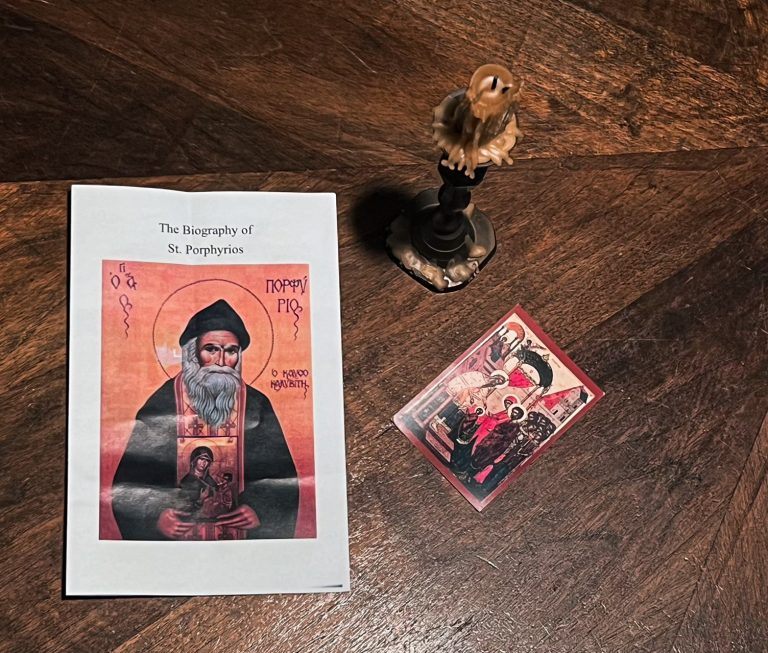
We light a beeswax candle, stand before our icons, and begin the day by orienting our hearts toward Christ.
Some mornings our prayers are peaceful and focused.
Other mornings the toddler is trying to blow out the candle, someone forgot to brush their hair, and another child can’t stop giggling.
And that’s okay.
We’re not striving for perfection. We’re building habits that, Lord willing, will stay with our children long after they’ve left our home.
Beginning the day in prayer reminds us that our homeschool doesn’t belong to us. It belongs to Christ.
Morning Basket Time
After breakfast, we gather together for one of my favorite parts of the day: our morning basket.
This has become the heartbeat of our homeschool.
Rather than separating everyone by grade level, we begin together as a family.
We’ll often read from Scripture, spend time with a story about one of the saints, read beautiful poetry, enjoy a chapter from a living book, or listen to a piece of classical music while the younger children color quietly nearby.
Sometimes we’ll memorize a verse.
Sometimes we’ll learn a hymn.
Sometimes we’ll simply linger over a conversation that wasn’t part of my lesson plans but was exactly what we needed.
These moments remind me that some of the richest learning can’t be measured with a checklist.
Individual Lessons
Once we’ve filled our minds and hearts together, we transition into our individual subjects.
The older children work through math, language arts, and handwriting while I rotate between helping each child as needed.
Our youngest is usually content playing nearby, “helping” with school, or joining us whenever he wants.
Not every lesson happens around a table.
Sometimes spelling is practiced while folding laundry.
Reading happens curled up on the couch.
Copywork is done outside on the porch while listening to the birds sing.
One of the greatest gifts homeschooling has given our family is the freedom to learn wherever life happens.
Outside Is a Classroom
Charlotte Mason famously encouraged spending hours outdoors, and I couldn’t agree more.
Some of our best lessons happen with dirt under our fingernails.
Nature study might look like identifying wildflowers, watching butterflies visit the garden, observing our ducks and chickens, sketching leaves, or simply sitting quietly enough to notice what God has already placed around us.
It’s easy to think of nature study as another subject to complete.
Instead, I’ve come to see it as an act of worship.
Creation constantly proclaims the glory of its Creator, and I want my children to grow up noticing that.
Living the Liturgical Year
One of the most beautiful changes we’ve made since becoming Orthodox is allowing the rhythm of the Church to shape the rhythm of our homeschool.
Instead of only celebrating the holidays our culture places on the calendar, we’ve begun slowing down to celebrate feast days, learn about the saints, read books connected to the liturgical seasons, bake traditional recipes, and have conversations that naturally flow from the life of the Church.
These moments rarely feel like “school.”
They simply feel like family life.
And I think that’s exactly the point.
Faith isn’t something we add onto our homeschool after we’ve finished the important subjects.
It is woven into every part of our day because it is woven into every part of our lives.
Ending the Morning Well
By lunchtime, we’ve rarely completed everything I originally planned.
And I’ve stopped expecting to.
Some days we finish every lesson.
Some days we spend an hour talking about a question one of the children asked after reading about a saint.
Some days the baby needs extra attention, the bread overproofs, someone spills milk, and math gets pushed until after lunch.
There was a time when those interruptions felt like failures.
Now I see them differently.
Our goal isn’t to create perfect homeschool days.
It’s to faithfully live the ordinary days God has given us.
Because childhood isn’t built in the extraordinary moments.
It’s built in thousands of ordinary mornings spent reading beautiful books, saying simple prayers, exploring God’s creation, sharing meals around the table, and slowly learning to love Christ together.
Those ordinary mornings are the homeschool memories I hope my children carry with them for the rest of their lives.
Building an Orthodox Morning Basket
If I had to choose just one part of our homeschool day that has transformed our family the most, it would be our morning basket.
It’s become the anchor of our homeschool rhythm.
Before we divide into individual lessons, before math books are opened or handwriting pages are completed, we come together as a family. No matter the ages of our children, everyone can participate in some way.
That’s one of the things I love most about a Charlotte Mason education. Instead of separating children by grade level all day long, it creates opportunities for the entire family to learn together.
Our morning basket isn’t about getting through a checklist as quickly as possible. It’s about slowing down, delighting in beautiful ideas, and beginning our day with Christ at the center.
What Is a Morning Basket?
If you’re new to homeschooling, a morning basket is simply a collection of books and resources that you enjoy together as a family each morning.
Rather than assigning every child separate work right away, everyone gathers for shared learning.
Some days we spend twenty minutes together.
Other days, we’re so engaged in conversation that an hour passes before we realize it.
The goal isn’t to finish everything every day.
It’s to create a gentle rhythm that fills our hearts and minds with truth, goodness, and beauty before we move into independent work.
What We Keep in Our Morning Basket
Every family’s basket will look a little different, but ours typically includes a mix of faith, literature, art, music, and nature.
Some of our favorite staples include:
Faith
- The Orthodox Study Bible
- A children’s Bible
- Lives of the Saints
- Daily Scripture readings
- Prayer cards
- Icon cards
- Prayer rope
- Feast day books
Living Books
- Read-aloud novels
- Classic children’s literature
- Fairy tales
- Fables
- Historical stories
Poetry
We read a few poems throughout the week, often returning to favorites over and over again. Charlotte Mason believed children deserved rich language from an early age, and I’ve found that to be so true.
Nature Study
Depending on the season, we might include:
- Nature journals
- Bird guides
- Wildflower identification books
- Field guides
- Seasonal picture books
Sometimes we’ll bring in treasures we’ve collected outside the day before, such as feathers, interesting leaves, wildflowers, or seed pods.
Art & Music Appreciation
We rotate through artists and composers throughout the year.
Some mornings we simply spend five minutes quietly observing a beautiful painting.
Other mornings we listen to classical music while everyone colors or works with their hands.
I’ve found that these quiet moments of beauty often become some of the most memorable parts of our day.
Making Orthodoxy Part of the Rhythm
One of the biggest changes we’ve made over the past year has been intentionally choosing resources that immerse our children in the life of the Church.
Rather than treating faith as one subject among many, we’ve begun weaving it naturally throughout our mornings.
One resource I’ve especially loved is Tea Time with the Saints from Draw Near Designs.
It’s such a gentle and beautiful way to learn about the saints through short readings, discussion questions, recipes, artwork, and meaningful family activities. Instead of feeling like another lesson to complete, it creates opportunities to slow down together and learn from the lives of those who have gone before us in the faith.
Our shelves have also been steadily filling with books from Potamitis Publishing. Their beautifully illustrated saint stories, feast day books, prayer books, and children’s readers have become some of the most-loved books in our home. If you’re hoping to build an Orthodox family library, I truly don’t think there’s a better place to begin.
Another resource I return to often is Ancient Faith Ministries. Their children’s books, family devotionals, podcasts, and saint stories have been such a blessing as we’ve continued learning alongside our children. I especially love that there are resources available for every age, making it easy to continue growing as a family. The first book I purchased from them was A Child’s Guide to the Divine Liturgy– we still love it!
And if you’re looking for a Charlotte Mason-inspired curriculum from an Orthodox perspective, I can’t recommend Saint Emmelia Ministries enough. One of the things I appreciate most is their commitment to making their curriculum guides and educational resources available completely free. If you’re just beginning your homeschool journey or you’re trying to homeschool on a budget, it’s an incredible place to start exploring. Their thoughtful approach beautifully complements a living books education while keeping Christ and the life of the Church at the center.
Keep It Simple
One of the biggest mistakes I made when I first started homeschooling was believing I needed dozens of books in our morning basket.
The truth is, you don’t.
You could begin with just a Bible, a saint story, one beautiful read-aloud, and a poetry book.
That’s enough.
As the years go on, your family library will naturally grow.
Some of our favorite books have been birthday gifts.
Others were Christmas presents.
Some came from used bookstores, library sales, or generous friends.
Building a beautiful homeschool library doesn’t happen overnight, and it doesn’t need to.
Remember the Purpose
At the end of the day, the morning basket isn’t about checking another box.
It isn’t about keeping up with someone else’s homeschool.
It isn’t even about reading every book on your shelf.
It’s about creating space for your family to encounter truth, goodness, and beauty together.
It’s about beginning each day by reminding ourselves that Christ is present not only in our prayers, but in every story we read, every hymn we sing, every flower we admire, and every conversation we share.
That simple rhythm has become one of the greatest gifts of our homeschool.
What’s In Our Orthodox Morning Basket?
Faith
☦ Orthodox Study Bible
☦ Lives of the Saints
☦ Prayer Rope
☦ Icon Cards
Literature
☦ Current Read-Aloud
☦ Poetry Collection
☦ Fairy Tales
Nature
☦ Nature Journal
☦ Field Guide
☦ Watercolor Supplies
Beauty
☦ Composer Study
☦ Artist Study
☦ Tea Time with the Saints
Learning Through the Liturgical Year
One of the greatest gifts Holy Orthodoxy has given our family is a new understanding of time.
Before becoming Orthodox, our homeschool naturally revolved around the traditional school calendar. We celebrated the changing seasons, looked forward to holidays, and planned our lessons around the months of the year.
While there’s nothing wrong with that, we’ve found so much more richness in allowing the rhythm of the Church to shape the rhythm of our home.
Instead of asking, “What month is it?” we’re learning to ask, “Where are we in the life of the Church?”
The liturgical calendar has become a beautiful guide that gently directs our learning throughout the year.
Rather than adding more work to our homeschool, it gives greater purpose to the things we’re already doing.
Celebrating Feast Days
One of the simplest ways we’ve incorporated Orthodoxy into our homeschool is by celebrating feast days together.
That doesn’t always mean elaborate decorations or Pinterest-worthy activities.
Sometimes it’s as simple as reading about the saint of the day during morning basket.
Other times we’ll bake a special treat, light a candle, learn a new hymn, or spend a few extra minutes talking about the life of someone who faithfully followed Christ.
Children naturally connect with stories, and the lives of the saints offer some of the most beautiful examples of courage, humility, generosity, repentance, perseverance, and unwavering faith.
Over time, these celebrations become treasured family traditions.
Let the Saints Become Your History Teachers
One of my favorite discoveries has been realizing how naturally the lives of the saints connect with other subjects.
Reading about a missionary saint often leads us to geography.
Learning about the early martyrs opens conversations about Church history and the Roman Empire.
The lives of holy men and women become living history lessons that help our children understand not only when events happened, but why they mattered.
History suddenly becomes personal.
Instead of memorizing dates alone, our children begin to recognize real people who loved Christ faithfully in every century and every corner of the world.
Follow the Church Through the Seasons
As the liturgical seasons change, so do many of the books, artwork, and traditions in our homeschool.
During Great Lent, our mornings naturally become quieter and more reflective.
As Pascha approaches, our excitement grows with every passing week.
The Nativity Fast invites us to prepare our hearts for Christ’s birth.
The bright joy of Pascha fills our home with celebration.
Rather than separating our faith from our homeschool, the Church calendar gently shapes the atmosphere of our learning throughout the entire year.
Connect Learning to the Church Calendar
One of the things I love most about a Charlotte Mason education is that every subject naturally connects with another.
The liturgical calendar makes those connections even richer.
For example, when studying a particular saint, you might also:
- Find the country where they lived on a map.
- Read about the time period they lived in.
- Cook a traditional meal from their homeland.
- Create artwork inspired by an icon.
- Learn a hymn connected to the feast.
- Practice copywork using a meaningful quote.
- Spend time outside observing God’s creation and thanking Him for the beauty around you.
Learning begins to feel less like isolated subjects and more like one beautiful tapestry, with every thread ultimately pointing back to Christ.
Keep It Joyful
One thing I’ve had to remind myself of often is that we don’t have to celebrate every feast day perfectly.
There are hundreds of saints commemorated throughout the year.
Some days we’ll go all out.
Other days we’ll simply mention a saint during breakfast and move on with our lessons.
That’s okay.
The goal isn’t perfection.
The goal is faithfulness.
Little by little, these rhythms become part of the culture of your home.
Your children begin recognizing familiar saints.
They anticipate the great feasts.
They notice the changing colors of the liturgical seasons.
They learn that time itself is a gift from God, drawing us ever closer to Him.
A Beautiful Invitation
One of the things I appreciate most about homeschooling is that it gives us the freedom to linger.
When a saint’s story sparks meaningful questions, we don’t have to rush to the next subject.
When a feast day falls on a Tuesday morning, we can pause to celebrate it.
When the weather is beautiful, we can take our nature journals outside and marvel at God’s creation.
These moments rarely fit neatly into a lesson plan.
And yet, they’re often the moments our children remember most.
Over time, I’ve realized that the liturgical year isn’t something we squeeze into our homeschool.
It has become the rhythm that quietly shapes it.
As we walk through the seasons of the Church together, we’re continually reminded that education isn’t only about preparing our children for adulthood.
It’s about helping them grow into faithful men and women who know that every season, every feast, every ordinary day, and every breath ultimately belongs to Christ.
How We Celebrate Feast Days in Our Home
☦ Read the saint’s story together.
☦ Pray the troparion (when appropriate).
☦ Enjoy a special tea or simple homemade treat.
☦ Add the saint to our timeline or map.
☦ Create a watercolor nature page or icon-inspired artwork.
☦ Read a related living book.
☦ End the day with gratitude and family discussion.
Filling Your Shelves with Truth, Goodness, and Beauty
One of the most beautiful aspects of both a Charlotte Mason education and Holy Orthodoxy is the emphasis on beauty.
Beauty isn’t an extra.
It isn’t something we add after the “important” work is finished.
Beauty forms us.
The stories we read, the artwork we admire, the hymns we sing, the icons that surround our prayer corner, and the conversations we have around our table all quietly shape our hearts over time.
That’s why we’ve become much more intentional about the books we bring into our home.
Rather than filling our shelves with books we’ll read once and forget, we’re slowly building a family library of living books that we’ll return to year after year.
Some of these books have already become old friends in our home.
Others are waiting patiently on the shelf until little hands are ready for them.
Together, they’re helping create a culture where truth, goodness, and beauty are encountered every day.
Books That Point Our Hearts Toward Christ
Our faith library continues to grow slowly, one book at a time.
Some of our favorite publishers and resources include:
- Potamitis Publishing
- Draw Near Designs
- Ancient Faith Ministries
- Saint Emmelia Ministries
- Our Parish Bookstore
From beautifully illustrated saint stories to family devotionals, prayer books, feast day resources, and read-alouds, these publishers have been such a gift as we’ve sought to build an Orthodox homeschool rooted in the life of the Church.
Our Favorite Categories to Collect
Rather than purchasing books randomly, I’ve found it helpful to think in categories.
Lives of the Saints
These are some of the most-loved books in our home.
The saints become companions, mentors, and examples of faithful living for our children. Their stories naturally spark conversations about courage, repentance, humility, generosity, and perseverance.
Feast Day Books
As we’ve begun following the liturgical calendar more intentionally, I’ve loved adding books that correspond with the great feasts and seasons of the Church.
Reading these together helps our children anticipate and celebrate the rhythm of the Church year in meaningful ways.
Living Literature
Classic stories continue to be one of the cornerstones of our homeschool.
Whether it’s Beatrix Potter, Thornton Burgess, Laura Ingalls Wilder, or another beloved author, these books nourish the imagination in ways that worksheets never could.
Nature Books
Charlotte Mason believed children should spend time outdoors every day, and I’ve found that beautiful nature books only deepen that experience.
Bird guides, wildflower books, field guides, and gentle nature stories all encourage our children to observe God’s creation with wonder.
Poetry
Poetry has become one of my favorite additions to our morning basket.
Children have an incredible ability to absorb beautiful language, and I’ve been amazed at how often they recall lines we’ve read together weeks later.
Family Read-Alouds
If there’s one investment I would encourage every homeschool family to make, it’s a shelf full of wonderful read-alouds.
Some of our sweetest homeschool memories have happened with everyone gathered together on the couch while I read aloud.
Those stories have sparked laughter, tears, meaningful conversations, and countless rabbit trails that no curriculum could have planned.
Build Slowly
If you’re just beginning your homeschool journey, don’t feel pressured to build an entire library overnight.
Ours certainly didn’t happen that way.
Many of our books have come from birthday gifts, Christmas presents, used bookstores, library sales, and thoughtful recommendations from other homeschool families.
Some of our most treasured books cost only a few dollars.
Building a home library is much more like planting a garden than furnishing a room.
You don’t plant everything in a single afternoon.
You add to it season after season, watching it slowly grow into something beautiful.
The same is true of your family library.
One beautiful book at a time.
One meaningful conversation at a time.
One ordinary morning at a time.
Little by little, you’re creating a home where Christ is known, loved, and encountered through the stories your family shares together.
If I Were Starting From Scratch
If I were beginning our homeschool journey all over again, knowing what I know now, I would keep things so much simpler.
When I first started homeschooling, I thought I needed the perfect curriculum, a beautifully organized homeschool room, color-coded lesson plans, and shelves overflowing with educational resources.
Now I know that none of those things are what make a rich education.
If I were starting today, this is where I would begin.
Start with Christ
Before choosing a curriculum, I would focus on establishing the rhythms that point our family toward Christ.
A prayer corner.
Morning prayers.
Reading Scripture together.
Attending the services of the Church as often as possible.
Because no curriculum can replace the life of the Church.
Build a Morning Basket
Rather than purchasing dozens of separate resources, I would gather a small collection of books we could enjoy together every morning.
A Bible.
A book of saint stories.
A beautiful read-aloud.
A poetry collection.
A nature guide.
That’s enough to begin.
You can always add more later.
Choose Living Books Over More Curriculum
One lesson I’ve learned is that children often remember the stories we shared together far longer than they remember the worksheets they completed.
If I had to choose between another workbook and another wonderful book, I’d choose the book every time.
Living books have a way of shaping both the imagination and the heart.
Let Your Library Grow Naturally
You don’t need hundreds of books.
Our library has grown slowly through birthdays, Christmases, used bookstores, library sales, and thoughtful recommendations from friends.
A library built over time often becomes far more meaningful than one purchased all at once.
Use the Resources That Bless Your Family
There are so many wonderful Orthodox resources available today.
Some of my favorites include Potamitis Publishing, Draw Near Designs, Ancient Faith Ministries, and Saint Emmelia Ministries.
Each has blessed our family in different ways, but none of them are requirements.
They’re simply tools that help support the greater work God is already doing in our home.
Give Yourself Grace
Perhaps the biggest thing I would tell my younger self is this:
Your children don’t need a perfect homeschool.
They need a faithful mother.
There will be mornings when the baby won’t nap.
When the math lesson doesn’t get finished.
When everyone is cranky.
When lunch burns because you were helping someone sound out words.
Those days aren’t failures.
They’re simply part of family life.
The Lord isn’t asking us to create perfect homeschool memories.
He’s inviting us to be faithful with the ordinary moments He’s entrusted to us.
And those ordinary moments are often where the deepest growth happens.
Final Thoughts
When I look back on our homeschool journey so far, I don’t remember every curriculum we’ve used or every lesson we’ve completed.
I remember the stories.
The mornings gathered around our table.
The nature walks that turned into hours of exploring.
The laughter during read-alouds.
The conversations that began with a simple question and somehow ended with all of us marveling at God’s goodness.
Since becoming Orthodox, those ordinary moments have taken on an even deeper meaning.
Our homeschool hasn’t become perfect.
Our children haven’t suddenly become perfectly attentive.
I certainly haven’t become a perfect homeschool mother.
What has changed is our foundation.
We’ve stopped viewing homeschooling as simply an academic pursuit and have begun to see it as one small part of our family’s life in Christ. ☦
That perspective has changed everything.
Our lessons begin with prayer because we want Christ to be the beginning of everything.
Our books point toward truth because Christ is Truth.
We seek beauty because every beautiful thing reflects the One who created it.
We celebrate the feasts because the Church teaches us to sanctify time itself.
Little by little, ordinary mornings are becoming holy ground.
If there’s one encouragement I hope you take away from this post, it’s this:
You don’t have to do everything at once.
You don’t need an overflowing library.
You don’t need a picture-perfect homeschool room.
You don’t need the most expensive curriculum.
Begin where you are.
Pray together.
Read beautiful books.
Spend time outside.
Celebrate the life of the Church.
Love your children well.
Trust that God is at work in the quiet faithfulness of ordinary days.
Long after the math facts have been forgotten and the handwriting pages have yellowed with age, my prayer is that our children will remember something far more important.
That home was a place where Christ was loved.
Where beauty was treasured.
Where learning was an act of worship.
Where faith wasn’t simply taught, but lived.
And I pray the same for your family, too.
“Train up a child in the way he should go; even when he is old he will not depart from it.” — Proverbs 22:6
Author Profile

- Hello there, I'm Gabby! I'm a mom of four, married to my wonderful husband Marco, and I have a deep passion for simple living, vintage homes, and cooking everything from scratch! Although I grew up in Las Vegas, my husband's military service brought us to the east coast, where we have now made coastal North Carolina our home. While I didn't grow up on a farm, I have always been fascinated by that lifestyle and have dedicated my adult life to learning and embracing those skills, which I am excited to share with all of you!
Latest entries
 ☦️ Liturgical LivingNovember 3, 2026Living Liturgically Without Overwhelm: Finding a Gentle Rhythm in Orthodox Family Life
- ☦️ Liturgical LivingNovember 3, 2026November Orthodox Morning Board: 30 Days of Saints, Vocabulary & History
- FallOctober 20, 2026From-Scratch Pumpkin Pie with Fresh Milled Flour Crust
- Fresh-Milled FlourOctober 20, 2026Easy Fresh Milled Flour Pie Crust (Food Processor Method)