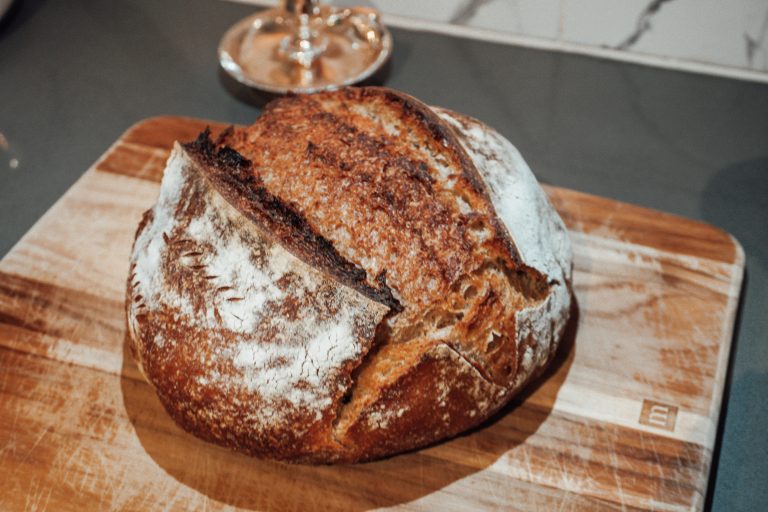
How to Make Sourdough Bread More or Less Sour {A Guide to Adjusting Flavor}
Last Updated on July 13, 2025 by Gabby Hatten
Picture this: After a painstaking month of developing your very own sourdough starter, you’ve just whipped up your very first sourdough loaf. You patiently wait two hours before cutting into your loaf. Finally, the moment you’ve been waiting for… but it falls flat. It’s not sour at all?! How could that be?! See, the beauty of homemade sourdough bread is that the sourness of your sourdough bread is entirely customizable. By learning the essentials, you’ll be able to crank up, or tone down, that tangy flavor as much as your taste buds desire.

Understanding Sourdough Flavor:
When it comes to sourdough bread, the magic really happens, thanks to the dynamic duo of wild yeast and lactic acid bacteria living in your sourdough starter. Think of your starter as a bustling community where these tiny organisms work together to create the delightful flavors we love. Wild yeast is responsible for fermentation and helps your bread rise, while lactic acid bacteria add that signature tang that makes sourdough so special. As the bacteria munch on the sugars in the dough, they produce lactic acid, which is what gives sourdough its characteristic sour taste.
The balance between these two components is what ultimately shapes your bread’s flavor profile. If you have a thriving culture of lactic acid bacteria, you’ll notice a stronger tang in your loaf. On the other hand, if the wild yeast takes the lead, you might end up with a milder flavor. This interplay is influenced by several factors, including how you feed your starter, the fermentation time, and the temperature at which your dough rises. So, as you embark on your sourdough journey, remember that you’re not just baking bread; you’re nurturing a vibrant ecosystem that brings depth and complexity to every bite.
Factors Influencing Sourness in Sourdough Bread
Hydration Level: The hydration level of your dough plays a crucial role in determining how sour your bread will taste. Higher hydration doughs tend to develop more sour flavors. This is because the increased moisture creates an environment where lactic acid bacteria can thrive, leading to greater acid production during fermentation. If you’relooking to amp up the tang in your sourdough, consider experimenting with a slightly wetter dough. Just remember, higher hydration can also make the dough trickier to handle, so be prepared for a bit of a learning curve!
Fermentation Time: Time is a key ingredient in sourdough baking, especially when it comes to developing flavor. Longer fermentation times allow for more acid to build up in the dough. During bulk fermentation, the dough is allowed to rise and develop flavor. If you want to increase the sourness, try adding a cold ferment after shaping your dough. However, keep an eye on the dough to ensure it doesn’t over-ferment, which can lead to undesirable flavors and textures.
Temperature: The temperature at which your dough ferments can significantly impact its sourness. Warmer temperatures encourage more bacterial activity, resulting in a tangier flavor profile. Conversely, cooler fermentation slows down the process and can lead to milder sourness. To control dough temperature, consider the environment where you’re fermenting your bread. If it’s too warm, you might want to find a cooler spot or use cold water in your dough. On the flip side, if it’s too cool, you can create a warmer environment by placing your dough in the oven with a light on or you can purchase a proofing box.
Starter Maintenance: The way you care for your sourdough starter directly affects its acidity and, consequently, the flavor of your bread. A consistent feeding schedule is essential. If you feed your starter regularly and with a higher ratio of flour to starter, you’ll likely end up with a milder flavor. On the other hand, letting your starter sit longer between feedings can boost its sourness. Additionally, the type of flour you use to feed your starter matters. Whole grain flours like whole wheat or rye provide more nutrients for the bacteria, promoting a tangier flavor. Experiment with different feeding schedules and flour types to find the balance that works for you.
Type of Flour: The flour you choose can significantly influence the flavor of your sourdough. Whole grains, such as whole wheat flour or rye flour, tend to encourage more sourness due to their higher nutrient content, which supports the growth of lactic acid bacteria. If you’ve been using all-purpose flour, consider incorporating some whole grain flour into your recipe. The tangiest loaf I’ve ever made was with einkorn flour. You might be pleasantly surprised by the depth of flavor and sourness it brings to your bread. Don’t hesitate to experiment with different types of flour to discover new flavor profiles!

Techniques to Adjust Sourness:
- Feeding Schedule: For a milder sourdough, consider feeding your starter more frequently with a higher ratio of flour to starter. For extra sour sourdough bread, let the starter sit longer between feedings.
- Retarding the Dough: Explain how placing the shaped dough in the refrigerator for an extended cold fermentation can enhance sourness while also improving flavor complexity.
- Amount of Starter: Using a higher amount of starter means a faster rise, whereas using a smaller amount equals a longer rise, which allows more tangy flavor to develop. My kid-friendly recipes call for at least 100 grams of starter for this reason.
Final Tips for Achieving Your Perfect Sourdough Flavor
Taste Testing: One of the most enjoyable aspects of baking sourdough is the journey of discovery that comes with it. As you implement the various factors we’ve discussed—like adjusting hydration levels, fermentation times, and temperatures—take the time to smell and feel your bread at different stages. Each bake is an opportunity to learn how flavors develop and change over time. By keeping notes on what you try, you’ll start to see patterns and understand how each adjustment affects the final product. This practice will help you hone in on your preferred level of sourness and create loaves that truly satisfy your taste buds.
Experimentation: Remember, the key to mastering sourdough is experimentation! Don’t be afraid to play around with different techniques, ingredients, and methods. Whether it’s trying out a new flour, adjusting your feeding schedule, or extending fermentation times, every experiment brings you that much closer to finding that perfect balance that suits your palate. Baking is as much about the process as it is about the end result, so embrace the journey! The only way to figure out what works best for you is to roll up your sleeves and dive in. Happy baking, and may your sourdough adventures be delicious and rewarding!
Health Benefits: If you don’t have much preference regarding taste and your primary goal with sourdough is to gain as many health benefits as it offers, then you’re going to want to shoot for the longer fermentation times and extended cold proofing.
A Simplified Guide
For a more sour loaf: use less sourdough starter, cold ferment longer, high hydration, and/or use a hungry sourdough starter.
For less sourdough taste: use more starter, shorter/no cold ferment, low hydration, and/or use a healthy starter that has been fed regularly.
Room Temperature vs Cooler Temperatures and its Effects on the Fermentation Process
I find my bread dough to have a more sour flavor in the winter months simply due to the fact that my house tends to be colder, which then means it takes longer for my dough to get a good rise. On the flip side, during the hot summer months, my dough has much less sour flavour due to the decreased fermentation time. In the summer months it’s imperative that I include a final proof in the fridge to allow that sourdough sour taste to develop.
Ready to experiment? Check out my super simple sourdough bread recipe here and find all my other sourdough recipes here. Happy Baking!
Author Profile

- Hello there, I'm Gabby! I'm a mom of four, married to my wonderful husband Marco, and I have a deep passion for simple living, vintage homes, and cooking everything from scratch! Although I grew up in Las Vegas, my husband's military service brought us to the east coast, where we have now made coastal North Carolina our home. While I didn't grow up on a farm, I have always been fascinated by that lifestyle and have dedicated my adult life to learning and embracing those skills, which I am excited to share with all of you!
Latest entries
 ☦️ Liturgical LivingNovember 3, 2026Living Liturgically Without Overwhelm: Finding a Gentle Rhythm in Orthodox Family Life
- ☦️ Liturgical LivingNovember 3, 2026November Orthodox Morning Board: 30 Days of Saints, Vocabulary & History
- FallOctober 20, 2026From-Scratch Pumpkin Pie with Fresh Milled Flour Crust
- Fresh-Milled FlourOctober 20, 2026Easy Fresh Milled Flour Pie Crust (Food Processor Method)