How to Convert Your Sourdough Starter to Fresh-Milled Flour
Last Updated on February 12, 2026 by Gabby Hatten
One of the most common questions I hear when people start milling their own grain is:
“Can I switch my sourdough starter to fresh-milled flour without ruining it?”
The short answer? Yes, absolutely.
And the longer answer is that sourdough starters are far more resilient than we give them credit for.
If you already have a healthy starter fed with white flour, all-purpose, or a mix, converting it to fresh-milled flour is not only possible… it often leads to a stronger, more active starter once it adjusts.
This post is written for both beginners and experienced sourdough bakers, and it reflects how I actually feed my starter at home: a blend of fresh-milled grains depending on the day, with a little all-purpose flour worked in occasionally. There’s no perfection required here: just observation and consistency.
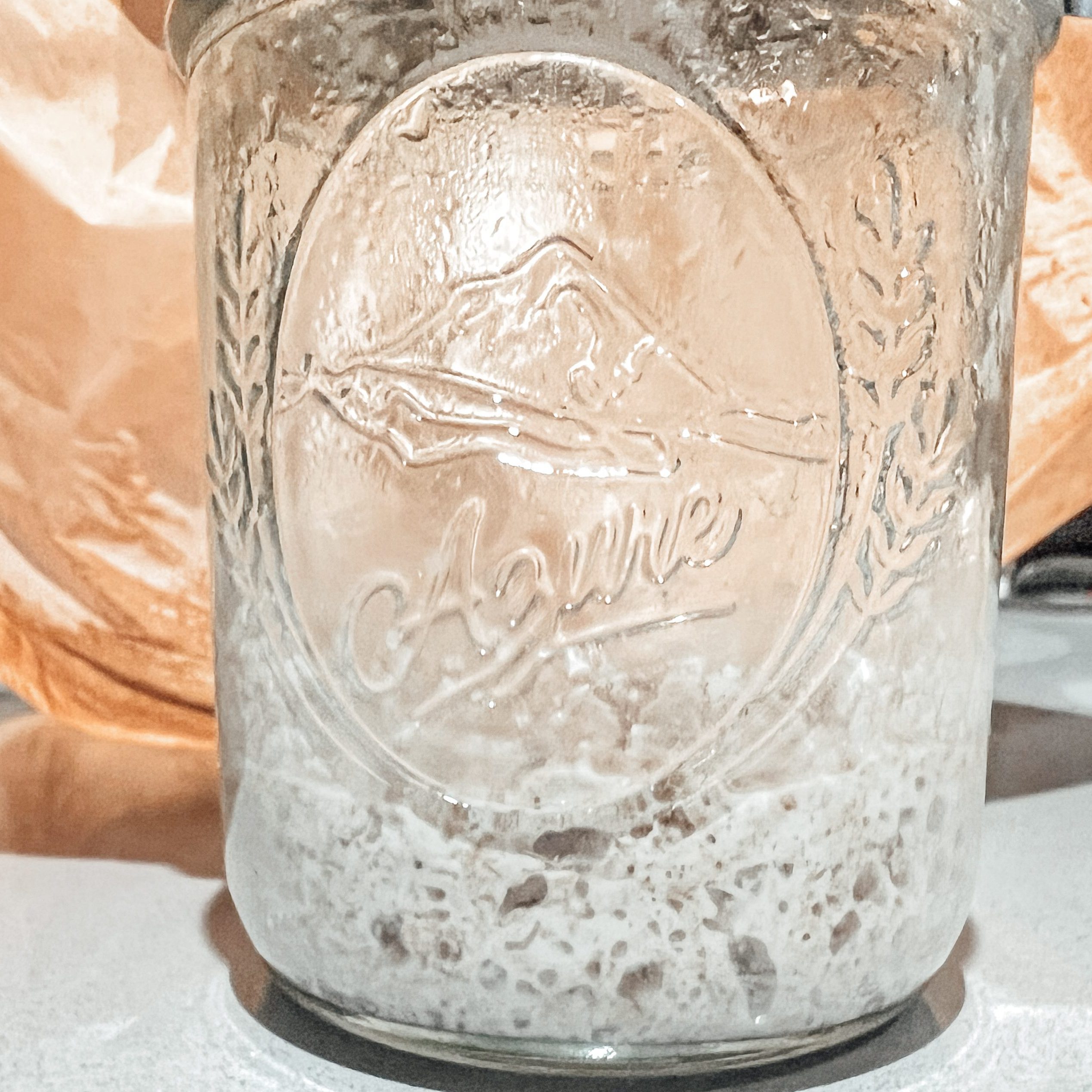
Why Switch a Starter to Fresh-Milled Flour?
Fresh-milled flour brings a lot to the table for sourdough.
- It contains the entire grain: bran, germ, and endosperm
- It’s richer in minerals and nutrients that yeast and bacteria love
- It often produces strong fermentation and deeper flavor
Many people notice their starter becomes more active over time, even if there’s a brief adjustment period at the beginning.
Will Switching Kill My Starter?
This is the fear, and I want to gently put it to rest.
A healthy sourdough starter is a living culture, not a fragile recipe. Changing flour types does not kill it. What can happen is a short transition phase where the starter:
- Rises more slowly
- Smells different (more earthy or wheaty)
- Thickens or absorbs water faster
That doesn’t mean anything is wrong. It simply means the microbes are adjusting to a new food source.
What Happens When You Convert to Fresh-Milled Flour?
Here’s what you might notice in the first few days:
- Activity may slow temporarily
- The starter may feel thicker or stiffer
- The smell may shift from tangy to more grain-forward
- Rise times may change
All of this is normal. Fresh-milled flour behaves differently than white flour, especially when bran and germ are present.
What Grains Can You Use?
You don’t need to overthink this. I personally feed my starter a blend of whatever I’m milling that day, which may include:
- Soft white wheat
- Hard white wheat
- Hard red wheat
- Ancient grains (spelt, einkorn, etc.)
- A small amount of all-purpose flour occasionally
This flexibility works beautifully. Starters don’t need a single “perfect” flour—they need regular feeding and hydration.
If you want a gentle transition, soft white wheat is a great place to start. Hard wheats tend to ferment more aggressively once established.
Step-by-Step: How to Convert Your Starter
Day 1: Partial Conversion
Start with your existing active starter.
Feed it using:
- 50% of your usual flour
- 50% fresh-milled flour
- Water as needed for consistency
Aim for a texture similar to thick pancake batter. Fresh-milled flour absorbs more water, so don’t be afraid to add a little extra.
Let it ferment at room temperature.
Day 2–3: Increase Fresh-Milled Flour
If your starter is bubbling and smells pleasant (even if it hasn’t doubled yet), increase the ratio:
- 75% fresh-milled flour
- 25% previous flour
- Adjust water as needed
You should begin to see more structure and bubbles forming, though rise time may still be slower than you’re used to.
Day 4+: Fully Fresh-Milled (With Flexibility)
At this point, you can feed your starter entirely fresh-milled flour if you’d like.
This is also where flexibility comes in. It’s perfectly fine to:
- Rotate grains day to day
- Use blends
- Add a little all-purpose flour occasionally
What matters most is consistency, not purity.
Hydration Matters More Than Ratios
This is one of the biggest differences with fresh-milled flour.
Fresh-milled flour:
- Absorbs more water
- Thickens as it sits
- Can look “dry” quickly if under-hydrated
Signs your starter needs more water:
- Very stiff texture
- Little to no bubbling
- Slow or uneven rise
You want a starter that is:
- Thick but stirrable
- Smooth with visible bubbles
- Able to rise and fall predictably
When in doubt, add a tablespoon of water and observe.
Can You Bake with It Right Away?
Yes—but with a few caveats.
You can bake with a freshly converted starter, especially for:
- Pancakes
- Waffles
- Discard recipes
- Flatbreads
For bread loaves, I recommend waiting until your starter:
- Doubles reliably
- Smells pleasantly tangy
- Shows consistent rise and fall over a few feedings
This usually takes 3–7 days, depending on temperature and flour blend.
Troubleshooting Common Issues
Starter isn’t rising:
Give it time, keep feeding consistently, and check hydration.
Starter smells dull or overly sour:
Feed more frequently or increase flour slightly.
Starter is too thick:
Add water—fresh-milled flour needs it.
Liquid forming on top:
Normal. Stir it in or feed sooner.
Maintaining a Fresh-Milled Flour Starter
Once converted, maintenance is simple:
- Feed daily if kept at room temperature
- Refrigerate and feed weekly if baking less often
- Adjust flour blends based on what you’re baking
- Trust your observations more than the clock
There’s no single “right” way—just a rhythm that works for your kitchen.
Converting your sourdough starter to fresh-milled flour doesn’t require starting over, special ratios, or rigid rules. It’s simply a process of feeding, observing, and adjusting.
Your starter is capable of adapting—and once it does, you may find it’s stronger and more flavorful than ever.
If you’re milling your own grain already, this is a beautiful next step in creating a truly from-scratch kitchen.
Author Profile

- Hello there, I'm Gabby! I'm a mom of four, married to my wonderful husband Marco, and I have a deep passion for simple living, vintage homes, and cooking everything from scratch! Although I grew up in Las Vegas, my husband's military service brought us to the east coast, where we have now made coastal North Carolina our home. While I didn't grow up on a farm, I have always been fascinated by that lifestyle and have dedicated my adult life to learning and embracing those skills, which I am excited to share with all of you!
Latest entries
 ☦️ Liturgical LivingNovember 3, 2026Living Liturgically Without Overwhelm: Finding a Gentle Rhythm in Orthodox Family Life
- ☦️ Liturgical LivingNovember 3, 2026November Orthodox Morning Board: 30 Days of Saints, Vocabulary & History
- FallOctober 20, 2026From-Scratch Pumpkin Pie with Fresh Milled Flour Crust
- Fresh-Milled FlourOctober 20, 2026Easy Fresh Milled Flour Pie Crust (Food Processor Method)


