How Soon Do Easter Eggers Lay Eggs + Signs to Know
Last Updated on January 23, 2026 by Gabby Hatten
If you’re raising Easter Eggers for the first time, the waiting can feel endless.
You bring home those tiny fluff balls, set up the brooder, buy the feed… and then months later you’re still peeking into the nesting boxes wondering when those beautiful blue and green eggs will finally appear.
The good news? Easter Eggers are dependable layers once they get going — and there are some clear signs to watch for when that first egg is right around the corner.
How Old Are Easter Eggers When They Start Laying?
Most Easter Eggers begin laying between:
18 and 24 weeks old (about 4½ to 6 months)
Some will surprise you early, while others take their sweet time — especially during fall or winter when daylight hours are shorter.
A few factors that affect timing:
- Amount of daylight (laying slows with shorter days)
- Nutrition and access to quality layer feed
- Stress (moving coops, predators, flock changes)
- Overall health and breed genetics
If your pullets are past 24 weeks and still not laying, don’t panic. Many healthy hens simply mature a bit later.
Signs Your Easter Egger Is About to Start Laying
Here are the most reliable clues that eggs are coming soon:
1. Their Comb Turns Brighter Red
Young pullets usually have pale, small combs. As laying time approaches, their comb and wattles become:
- Larger
- Softer
- Bright red
This is one of the earliest physical signs.
2. They Start “Practicing” Nesting Boxes
You may notice your hens:
- Sitting in nesting boxes for no reason
- Rearranging bedding
- Exploring dark corners of the coop
They’re testing out where those first eggs should go.
3. The Squat Test
When you gently approach a hen and she:
- Lowers her body
- Spreads her wings slightly
- Freezes in place
That’s called the squat — and it usually means she’s mature and close to laying.
4. Their Body Shape Changes
Pullets fill out right before laying:
- Wider hips
- Fuller abdomen
- Heavier feel when picked up
They just look more “hen-like” instead of lanky teenagers.
5. Louder, New Noises
Many hens become more vocal right before laying — sometimes practicing their future “egg song.”
You might hear strange new chatter or louder clucking in the coop.
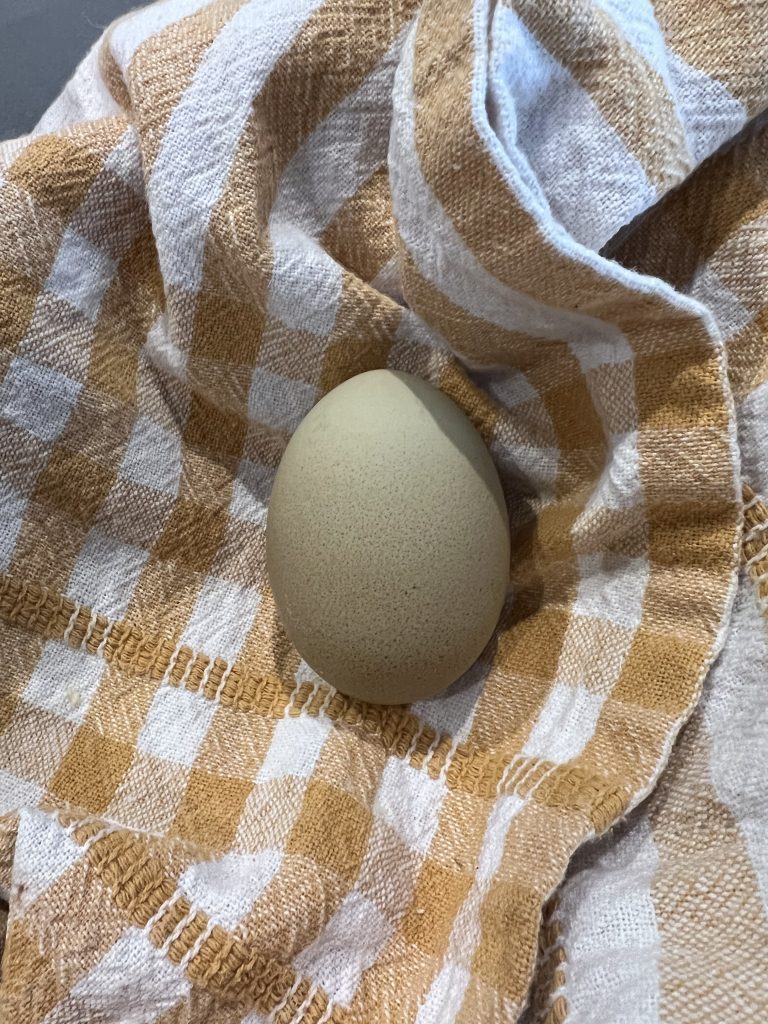
What Color Eggs Will Easter Eggers Lay?
One of the joys of Easter Eggers is the surprise.
They can lay:
- Blue
- Green
- Aqua
- Olive
- Occasionally pink-tinted eggs
No two flocks look exactly the same, which makes collecting eggs especially fun.
How Many Eggs Do Easter Eggers Lay?
On average:
3–5 eggs per week
They’re not as prolific as production hybrids, but they’re steady, friendly, hardy birds that do well in backyard flocks.

Why Your Easter Egger Might Be Delayed
If your hens seem slow to start, common reasons include:
- Winter or short daylight hours
- Low protein diet (they need 16–18%)
- Stress from moving coops or adding birds
- Molting
- Heat waves
Adding artificial light in winter can help, but many homesteaders choose to let hens follow natural rhythms.
A Gentle Homestead Perspective
Waiting for those first eggs is one of those quiet lessons in patience that homesteading teaches over and over again.
The garden doesn’t rush. Sourdough doesn’t hurry. And chickens don’t lay on our timeline either.
But when that first soft blue egg finally appears in the nesting box, it feels like a small miracle… proof that slow work and steady care really do bear fruit.
Quick FAQ
Can Easter Eggers lay before 18 weeks?
Occasionally, but it’s uncommon. Most need more time to mature.
Will cold weather stop laying?
It can delay the start, but most hens resume once daylight increases.
Do they need layer feed before laying?
Switch around 16–18 weeks or once they begin laying.
-
How to Set Up Your Greenstalk + Total Cost Breakdown
Last Updated on June 10, 2026 by Gabby Hatten After years of admiring GreenStalk planters from afar, I finally have my own. Well, technically my husband is the one who finally pulled the trigger and ordered them for me as a Mother’s Day gift, which somehow makes them even more special. As a gardener and…
-
What I’m Planting in My First GreenStalk Garden (Zone 8B)
Last Updated on June 4, 2026 by Gabby Hatten For years, I’ve admired GreenStalk vertical planters from afar. Every spring I’d see gardeners filling them with strawberries, herbs, and fresh greens, and I’d add one to my mental wish list for “someday.” Well, someday has finally arrived. This year, I’ll be setting up not one…
-
Beginner’s Guide to Raising Ducks
Last Updated on May 18, 2026 by Gabby Hatten What New Duck Owners Really Need to Know Ducks are often advertised as “easier than chickens,” but the truth is they have very specific needs that many beginners completely miss. Unfortunately, a lot of common duckling health issues happen simply because people are given chicken advice instead of…
-
The Truth About Farm Fresh Eggs: Why We Don’t Wash Ours (and What the “Bloom” Really Is)
Last Updated on April 16, 2026 by Gabby Hatten From Coop to Kitchen There’s nothing better than gathering fresh, colorful eggs each morning. Still warm from the nest.Tucked into straw.Laid by hens you care for. But if you’ve ever picked up a carton of farm fresh eggs, you might have noticed something different… They’re not…
-
The Truth About Roosters: Temperament, Aggression, and When It’s Time to Let Go
Last Updated on April 8, 2026 by Gabby Hatten If you’ve spent any time in the backyard chicken world, you’ve probably heard both sides: And the truth is…both can be true Some roosters are calm, watchful, and gentle. Others can turn aggressive—and fast. I’ve lived both sides of this. We kept a mean rooster far…
-
Biblical Stewardship of Animals and Land (A Homesteader’s Perspective)
Last Updated on April 3, 2026 by Gabby Hatten This week, our homestead grew in an unexpected way. We brought home two chickens from a friend whose flock had turned on them…And a tiny duckling found distressed and alone in an older couple’s yard. Three small lives, placed into our care a day apart. And…



Author Profile

- Hello there, I'm Gabby! I'm a mom of four, married to my wonderful husband Marco, and I have a deep passion for simple living, vintage homes, and cooking everything from scratch! Although I grew up in Las Vegas, my husband's military service brought us to the east coast, where we have now made coastal North Carolina our home. While I didn't grow up on a farm, I have always been fascinated by that lifestyle and have dedicated my adult life to learning and embracing those skills, which I am excited to share with all of you!
Latest entries
 ☦️ Liturgical LivingNovember 3, 2026Living Liturgically Without Overwhelm: Finding a Gentle Rhythm in Orthodox Family Life
- ☦️ Liturgical LivingNovember 3, 2026November Orthodox Morning Board: 30 Days of Saints, Vocabulary & History
- FallOctober 20, 2026From-Scratch Pumpkin Pie with Fresh Milled Flour Crust
- Fresh-Milled FlourOctober 20, 2026Easy Fresh Milled Flour Pie Crust (Food Processor Method)


