How to Make Homemade Pumpkin Puree from Fresh Pumpkin
Last Updated on October 20, 2026 by Gabby Hatten
It is so worthwhile to take a simple, seasonal ingredient and turn it into something useful in your kitchen. Especially when it’s as easy as roasting a pumpkin!
If you’ve only ever baked with canned pumpkin, making your own homemade pumpkin puree might seem like an unnecessary extra step. But I promise, it’s much simpler than you might think.
With just one sugar pie pumpkin, an oven, and a food processor, you can make fresh pumpkin puree to use in everything from pies and muffins to pancakes and homemade breads.
And the best part? You can make a big batch while pumpkins are in season, freeze it, and enjoy homemade pumpkin recipes long after autumn has passed.
Why Make Your Own Pumpkin Puree?
I’m a big believer that cooking from scratch doesn’t have to mean spending every waking moment in the kitchen.
Sometimes, it simply means learning to make the things we would otherwise purchase at the grocery store.
Homemade pumpkin puree is a wonderful example.
You don’t need any special ingredients, complicated techniques, or even much hands-on time. Most of the work happens in the oven while you’re busy doing something else.
A few reasons I love making pumpkin puree from scratch:
- Simple ingredients. All you need is a pumpkin!
- Less waste. You can roast the seeds for snacking and compost the remaining scraps.
- Versatile. Use your puree in sweet and savory recipes.
- Freezer-friendly. Make it once and store portions for future baking.
- A useful kitchen skill. Learning to prepare seasonal produce is a wonderful way to become more resourceful in the kitchen.
And there’s something particularly lovely about making a pumpkin pie knowing you started with an actual pumpkin rather than opening a can.
What Kind of Pumpkin Is Best for Homemade Pumpkin Puree?
Not all pumpkins are created equal, especially when it comes to baking.
For this recipe, I used a sugar pie pumpkin, sometimes simply called a pie pumpkin.
These smaller pumpkins are generally sweeter, less fibrous, and have a denser flesh than the large carving pumpkins we typically see around Halloween.
That makes them particularly well suited for homemade pumpkin puree.
While you can technically cook and puree a carving pumpkin, the results may be more watery and less flavorful.
Other varieties, including certain winter squashes, can also make wonderful purees. But if you’re specifically looking for a traditional pumpkin flavor for pies and baked goods, sugar pie pumpkins are an excellent place to start.
What You’ll Need
One of my favorite things about this recipe is how little equipment it requires.
Ingredients:
- 1 sugar pie pumpkin
- Water, if needed for blending
Equipment:
- Sharp knife
- Cutting board
- Spoon for removing seeds
- Baking sheet
- Parchment paper, optional
- Food processor or blender
- Fine-mesh strainer or cheesecloth, optional
That’s it!
No sugar, spices, or other ingredients are necessary. We’re making plain pumpkin puree so it can be used in any recipe.
How to Make Homemade Pumpkin Puree
Step 1: Prepare Your Pumpkin
Begin by washing the outside of your pumpkin to remove any dirt or debris.
Using a sharp knife and a sturdy cutting board, carefully cut the pumpkin in half from top to bottom. Remove the stem if necessary.
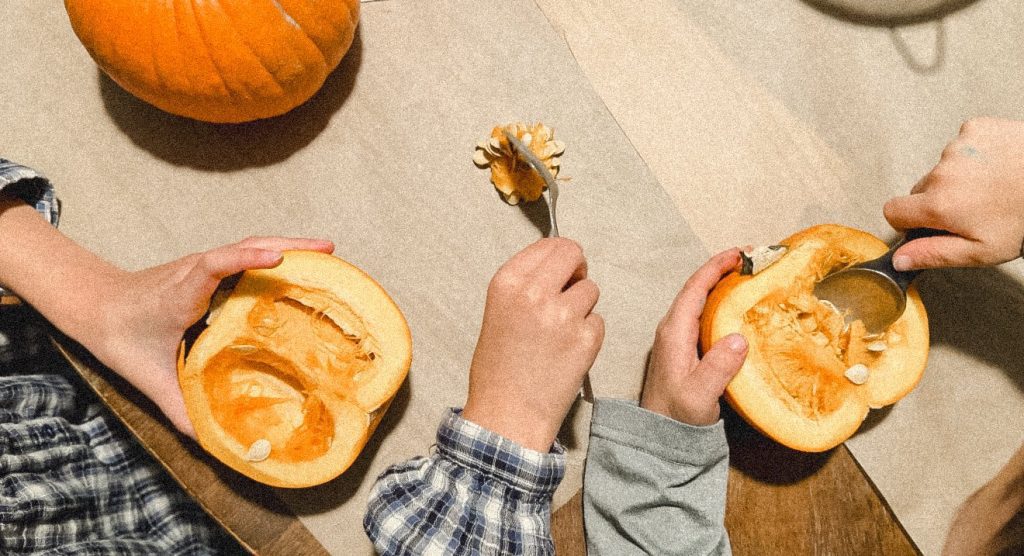
Scoop out the seeds and stringy pulp using a large spoon.
Don’t throw those seeds away! Set them aside to rinse and roast later for a simple seasonal snack.
Step 2: Roast the Pumpkin
Preheat your oven to 400°F.
Place the pumpkin halves cut-side down on a parchment-lined baking sheet.
Roast for approximately 35–50 minutes, depending on the size of your pumpkin.
The pumpkin is ready when the flesh is completely tender and a fork or knife slides through easily.
You may also notice the skin beginning to wrinkle or pull away from the flesh.
Step 3: Allow the Pumpkin to Cool
Remove the pumpkin from the oven and allow it to cool until it’s comfortable to handle.
Once cooled, carefully peel away the skin or scoop the soft pumpkin flesh out with a spoon.
The skin should separate relatively easily after roasting.
Step 4: Make the Pumpkin Puree
Transfer the roasted pumpkin flesh to a food processor or high-powered blender.
Blend until smooth and creamy, stopping occasionally to scrape down the sides.
Depending on the pumpkin’s moisture content, you may need to pause and redistribute the mixture a few times.
Avoid adding water unless absolutely necessary, especially if you plan to use the puree for pumpkin pie.
The goal is a thick, smooth puree rather than a thin, watery mixture.
Step 5: Remove Excess Moisture If Needed
This step is especially important if you’re planning to bake with your homemade pumpkin puree.
Unlike canned pumpkin, which tends to have a fairly consistent texture, fresh pumpkin puree can vary considerably in moisture content.
If your puree seems watery, transfer it to a fine-mesh strainer lined with cheesecloth and allow the excess liquid to drain.
You want a thick consistency similar to canned pumpkin.
This will help prevent watery pumpkin pies and overly moist baked goods.
How Much Puree Does One Pumpkin Make?
The amount of puree you get depends on the size and variety of pumpkin.
As a general estimate, a medium sugar pie pumpkin weighing around 3–4 pounds may yield approximately 2–3 cups of puree.
Your actual yield can vary, especially if you drain excess moisture.
For reference, a standard 15-ounce can of pumpkin contains approximately 1¾ cups of puree.
If you’re replacing canned pumpkin with homemade puree, measure the amount your recipe calls for rather than assuming one pumpkin equals one can.
How to Store Homemade Pumpkin Puree
One of the biggest benefits of making your own pumpkin puree is that you can prepare it ahead of time.
Refrigerating
Transfer cooled pumpkin puree to an airtight container and refrigerate for up to 3–4 days.
Freezing
For longer storage, freezing is my favorite option.
Allow the puree to cool completely, then portion it into freezer-safe containers or bags.
I recommend freezing in 1-cup or 1¾-cup portions. The latter is especially convenient for recipes that call for a standard can of pumpkin.
Label each container with the date and amount.
For the best quality, use frozen pumpkin puree within approximately 3 months.
When you’re ready to bake, thaw it overnight in the refrigerator.
If the puree releases additional liquid after thawing, simply stir it together or drain off the excess moisture as needed.
A note about canning: Homemade pumpkin puree should not be preserved using home-canning methods. Its density makes safe heat penetration difficult. Freezing is the recommended preservation method for pureed pumpkin.
What Can You Make with Homemade Pumpkin Puree?
Once you’ve made a batch, you’ll quickly discover how versatile pumpkin puree can be.
Some of my favorite ways to use it include:
- Homemade pumpkin pie
- Pumpkin muffins
- Pumpkin bread
- Pumpkin pancakes and waffles
- Pumpkin scones
- Pumpkin oatmeal
- Creamy pumpkin soup
- Pumpkin pasta sauces
You can also stir a spoonful into oatmeal or other warm breakfast dishes for a little seasonal flavor.
And of course, if you’re making a pumpkin pie completely from scratch, homemade puree is the perfect place to begin.
Related recipe: From-Scratch Pumpkin Pie with Fresh Milled Flour Crust (link once published).
Frequently Asked Questions
Is homemade pumpkin puree the same as canned pumpkin?
Both are cooked, pureed pumpkin or squash, but the texture and moisture content can differ.
Commercially canned pumpkin tends to be thicker and more consistent, while homemade puree varies depending on the pumpkin variety and preparation method.
For baking, it’s important to pay attention to the consistency.
Do I need to peel the pumpkin before roasting?
No! In fact, roasting the pumpkin with the skin still attached makes preparation much easier.
Once the pumpkin is tender and has cooled, the skin is usually easy to remove.
Can I use a blender instead of a food processor?
Absolutely. A blender works well, although you may need to blend in smaller batches or stop occasionally to scrape down the sides.
Can I use a large carving pumpkin?
You can, but carving pumpkins tend to have more watery, stringy flesh and a milder flavor.
For the best results, I recommend a sugar pie pumpkin or another variety intended for cooking.
Can I freeze homemade pumpkin puree?
Yes! Pumpkin puree freezes beautifully and is an excellent way to preserve seasonal pumpkins for future baking.
Bringing Simple Skills Back Into the Kitchen
Making homemade pumpkin puree is such a small thing, but I think these small skills add up.
Learning how to use seasonal produce, prepare ingredients from scratch, and stock our kitchens with food we’ve made ourselves doesn’t have to happen overnight.
It happens one recipe at a time.
And sometimes, it starts with something as simple as roasting a pumpkin.
Whether you’re preparing for Thanksgiving baking, stocking your freezer, or simply wanting to make more of your family’s food from scratch, I hope this recipe encourages you to give homemade pumpkin puree a try.

Homemade Pumpkin Puree
Equipment
- food processor
- baking sheet
- parchment
Ingredients
- 1 sugar pie pumpkin
Instructions
- Preheat oven to 375°F.
- Wash the sugar pie pumpkin, slice it in half, and scoop out the seeds and stringy pulp.
- Place the pumpkin halves cut-side down on a baking sheet.
- Roast for approximately 45–60 minutes, or until completely fork-tender.
- Remove from the oven and allow to cool before removing the skin and pureeing.
Notes
- Sugar pie pumpkins are ideal for baking because of their naturally sweet flavor and relatively dense flesh.
- Avoid adding water while pureeing unless absolutely necessary.
- Homemade pumpkin puree may contain more moisture than canned pumpkin. Drain before baking if needed.
- Freeze in 1-cup or 1¾-cup portions for convenient future use.
- Do not attempt to home-can pumpkin puree. Freezing is the recommended preservation method.
Author Profile

- Hello there, I'm Gabby! I'm a mom of four, married to my wonderful husband Marco, and I have a deep passion for simple living, vintage homes, and cooking everything from scratch! Although I grew up in Las Vegas, my husband's military service brought us to the east coast, where we have now made coastal North Carolina our home. While I didn't grow up on a farm, I have always been fascinated by that lifestyle and have dedicated my adult life to learning and embracing those skills, which I am excited to share with all of you!
Latest entries
 ☦️ Liturgical LivingNovember 3, 2026Living Liturgically Without Overwhelm: Finding a Gentle Rhythm in Orthodox Family Life
- ☦️ Liturgical LivingNovember 3, 2026November Orthodox Morning Board: 30 Days of Saints, Vocabulary & History
- FallOctober 20, 2026From-Scratch Pumpkin Pie with Fresh Milled Flour Crust
- Fresh-Milled FlourOctober 20, 2026Easy Fresh Milled Flour Pie Crust (Food Processor Method)