Fresh-Milled Sourdough Pumpkin Spice Scones with Maple Glaze
Last Updated on September 19, 2026 by Gabby Hatten
These fresh-milled sourdough pumpkin scones bring together some of the coziest flavors of fall in one tender, warmly spiced pastry. Fresh pumpkin, pure maple syrup, sourdough discard, and a buttery blend of soft white wheat and khorasan create a wholesome seasonal scone finished with a sweet maple glaze.

There is something about the first hint of cooler weather that makes me want to fill our kitchen with every warm and comforting flavor I can think of. Pumpkin, maple, cinnamon, freshly milled grain, and plenty of butter feel like the perfect way to welcome the changing season.
These fresh-milled sourdough pumpkin scones combine all of those cozy flavors in a simple pastry that feels special enough for a slow Saturday morning but is practical enough to make with ingredients I usually have at home.
Pumpkin can be a little tricky in scones. It adds wonderful flavor, color, and moisture, but too much can leave the dough cakey or cause the scones to spread in the oven. To balance that moisture, this recipe uses a combination of soft white wheat and khorasan, a modest amount of pumpkin purée, and no additional cream unless the dough truly needs it.
The result is a tender fresh-milled scone sweetened with maple syrup and finished with a buttery maple glaze.
These would be beautiful served with a warm cup of coffee or tea, tucked into a fall morning basket, or shared around the table after a morning spent outside.
Why You’ll Love These Fresh-Milled Pumpkin Scones
♡ Made with freshly milled grain. Soft white wheat creates a tender pastry, while khorasan brings structure and a naturally buttery flavor.
♡ A delicious use for sourdough discard. You can add unfed discard directly from the refrigerator without planning ahead or feeding your starter.
♡ Filled with cozy fall flavor. Pumpkin, maple, cinnamon, ginger, nutmeg, and a tiny pinch of cloves make these scones taste like autumn.
♡ Naturally sweetened in the dough. Pure maple syrup and a modest amount of brown sugar provide sweetness without overwhelming the flavor of the grain.
♡ Finished with a buttery maple glaze. Maple flavor can become subtle once baked, so the glaze gives each scone a more noticeable maple finish.
♡ No heavy cream required in the dough. The pumpkin, sourdough discard, and maple syrup provide enough moisture for the freshly milled flour once it has time to hydrate.
♡ Perfect for slow seasonal mornings. These scones pair beautifully with coffee, tea, homeschool mornings, and cozy weekends at home.
The Best Fresh-Milled Flour for Pumpkin Scones
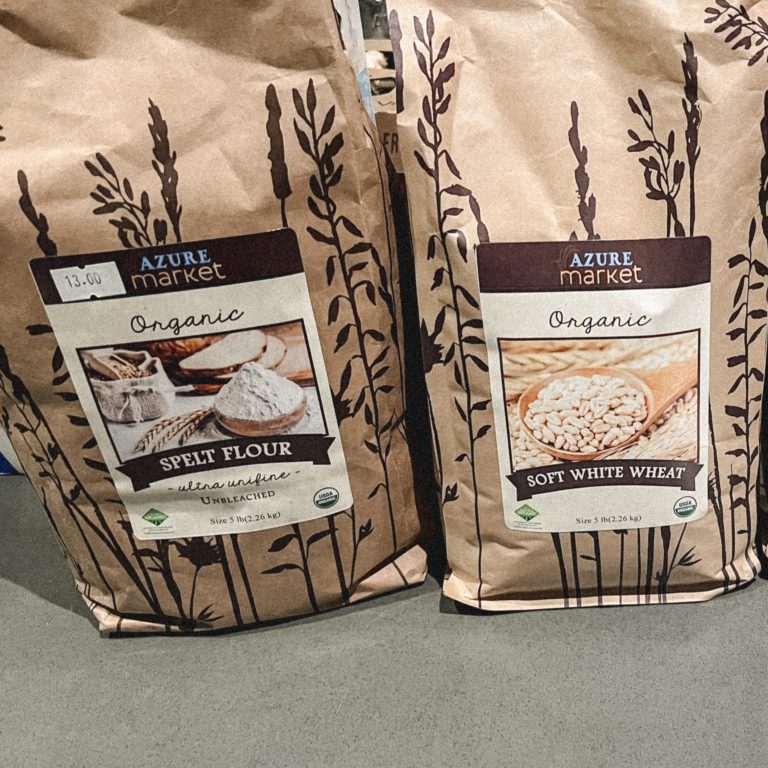
For this recipe, I used a blend of freshly milled soft white wheat and khorasan.
Soft white wheat is lower in protein than hard wheat and is an excellent choice for tender baked goods such as scones, biscuits, muffins, cookies, and cakes. It helps create a soft, delicate crumb rather than a chewy bread-like texture.
Khorasan has a beautiful golden color and a naturally rich, almost buttery flavor. It gives these scones additional structure while complementing the pumpkin, warm spices, and maple syrup.
For this recipe, you will need:
- 210 grams freshly milled soft white wheat flour
- 90 grams freshly milled khorasan flour
This gives us 300 grams of freshly milled flour in total, with approximately 70 percent soft white wheat and 30 percent khorasan.
If possible, weigh the freshly milled flour rather than measuring it by volume. The texture and volume of home-milled flour can vary depending on the grain, mill setting, and how firmly it settles into the measuring cup.
Why Fresh-Milled Scone Dough Needs Time to Rest
When the wet ingredients were first folded into the flour, this dough appeared quite dry. It was tempting to add cream immediately, but after resting for five minutes, the flour absorbed the moisture and the dough came together perfectly.
Freshly milled flour contains the entire wheat berry, including the bran and germ. It often takes a few minutes to fully absorb the liquid in a recipe. Adding more liquid immediately can result in a dough that becomes overly wet and sticky once it rests.
After mixing the dough, allow it to sit undisturbed for five minutes before deciding whether it needs additional cream.
When you gently squeeze a handful, the dough should hold together. It may still look shaggy, but there should not be a large amount of loose, dry flour remaining in the bowl.
Using Sourdough Discard in Pumpkin Scones
This recipe uses 75 grams of sourdough discard. The starter does not need to be active or recently fed because baking powder and baking soda provide the primary leavening.
Both room-temperature and refrigerated discard can work, although cold discard will help keep the dough cool.
Sourdough discard contributes flavor and tenderness while helping the freshly milled flour come together. Since it also adds moisture, this recipe does not begin with milk or cream in the dough.
The acidity in the discard also reacts with the baking soda, contributing to the scones’ rise and helping balance the sweetness.
Ingredients You Will Need
Freshly milled flour
A combination of soft white wheat and khorasan provides both tenderness and structure. Mill the wheat berries shortly before preparing the dough for the freshest flavor and nutrition.
Pumpkin purée
Use plain pumpkin purée, not sweetened pumpkin pie filling. This recipe uses just enough pumpkin to add flavor, moisture, and color without turning the scones into cake.
If your pumpkin purée appears unusually watery, blot it gently with a paper towel before weighing it.
Sourdough discard
You can use fed or unfed sourdough starter. A thick, 100 percent hydration discard works particularly well.
Cold butter
Cold butter is essential for flaky, well-risen scones. As the pieces of butter melt in the oven, they release steam and create little pockets within the dough.
Keep the butter refrigerated until you are ready to cut it into the flour.
Pure maple syrup
Maple syrup adds gentle sweetness to the scone dough and becomes the prominent flavor in the glaze. Use pure maple syrup rather than pancake syrup for the best flavor.
Brown sugar
A small amount of brown sugar deepens the warm fall flavor and helps the scones brown.
Fall spices
Cinnamon, ginger, nutmeg, and an optional pinch of cloves give the pumpkin plenty of warmth without overpowering the flavors of the grain and maple.
Leavening
Baking powder provides lift, while baking soda reacts with the sourdough discard.
How to Make Fresh-Milled Sourdough Pumpkin Scones
1. Mill the grain
Mill the soft white wheat and khorasan berries using a fine flour setting. Weigh 210 grams of soft white flour and 90 grams of khorasan flour into a large mixing bowl.
2. Combine the dry ingredients
Add the brown sugar, baking powder, baking soda, salt, cinnamon, ginger, nutmeg, and cloves. Whisk thoroughly so the leavening and spices are evenly distributed.
3. Cut in the cold butter
Cut the butter into small cubes and add it to the flour mixture. Use a pastry cutter, fork, or your fingertips to work the butter into the flour.
Stop when the mixture resembles coarse crumbs with some visible pea-sized pieces of butter remaining. Those small pieces help create a flaky texture as the scones bake.
If the butter begins to feel soft or greasy, place the bowl in the refrigerator for 10 minutes before continuing.
4. Mix the wet ingredients
In a separate bowl, stir together the pumpkin purée, sourdough discard, maple syrup, and vanilla extract.
5. Form the dough
Pour the pumpkin mixture into the flour and butter mixture. Fold gently with a fork or dough whisk just until a shaggy dough forms.
Avoid kneading or stirring aggressively. Overworking scone dough can make the finished pastries dense or tough.
6. Let the freshly milled flour hydrate
Allow the dough to rest in the bowl for five minutes before adding any additional liquid.
After resting, gently squeeze a small handful of dough. If it holds together, it has enough moisture. If it remains extremely dry and will not hold together, add cold heavy cream one teaspoon at a time.
My dough looked dry initially but came together perfectly after the five-minute rest, so I did not need to add any cream.
7. Shape the scones
Turn the dough onto a lightly floured surface and gently press it together. Shape it into a circle approximately 7 inches wide and ¾ to 1 inch thick.
Use a bench scraper or sharp knife to divide the circle into eight equal wedges.
For clearly defined sides and more even baking, separate the wedges before chilling.
8. Chill the shaped dough
Arrange the scones on a parchment-lined baking sheet, leaving approximately 2 inches between them.
Refrigerate the shaped scones for 45 to 60 minutes. Chilling firms the butter and helps prevent it from melting out of the dough before the scone structure has time to set.
If you have room in your freezer, you can freeze the shaped scones for 20 to 30 minutes instead.
9. Bake
Preheat the oven fully to 400°F. If desired, brush the tops of the cold scones with a small amount of heavy cream and sprinkle them with coarse sugar.
Bake directly from the refrigerator for 18 to 23 minutes. The scones are ready when the tops appear dry and set, the edges are lightly golden, and the centers no longer look wet.
If you have an instant-read thermometer, the centers should reach approximately 200°F to 205°F.
Let the scones rest on the baking sheet for five minutes before transferring them to a wire cooling rack.
10. Add the maple glaze
Wait until the scones are cool before adding the glaze. Whisk together the powdered sugar, maple syrup, melted butter, salt, and vanilla. Add milk or heavy cream one teaspoon at a time until the glaze is thick but pourable.
Drizzle it over the cooled scones. For a thicker, more visible glaze, allow the first layer to set for several minutes before adding a second drizzle.
How to Keep the Butter from Leaking Out of Scones
Butter leaking from homemade scones is usually a sign that the butter became too warm before the dough’s structure set in the oven. A small amount of bubbling butter around the bottom edges can be normal, but there should not be a large puddle across the baking sheet.
These steps will help:
- Begin with very cold butter.
- Leave some visible pea-sized butter pieces in the dough.
- Handle the dough gently and briefly.
- Chill the shaped scones, not just the unshaped ball of dough.
- Bake the scones directly from the refrigerator.
- Use a cool baking sheet lined with parchment paper.
- Make sure the oven is fully preheated before baking.
- Avoid opening the oven during the first 15 minutes.
If your kitchen is particularly warm or the dough feels soft after shaping, chill it for a little longer.
Tips for Tender Fresh-Milled Scones
Weigh the flour
Freshly milled flour can settle differently from commercial flour. A kitchen scale provides more consistent results.
Do not add liquid too quickly
The dough may look dry when it is first mixed. Give the flour five minutes to hydrate before adding cream.
Keep everything cold
Cold butter and cold dough are essential for good rise and a flaky texture.
Do not knead the dough
Press the mixture together gently. It does not need to become perfectly smooth.
Avoid over baking
Freshly milled baked goods may appear darker than pastries made with refined white flour. Look for set centers and lightly golden edges rather than waiting for the scones to become deeply browned.
Let the scones cool before glazing
Glaze will melt into warm scones. For a thick, pretty maple drizzle, wait until they are cool.
Serving Suggestions
These maple pumpkin scones are especially delicious served with:
- Hot coffee or a homemade maple latte
- Black tea or chai
- Softened butter
- Apple butter
- A drizzle of maple syrup
- Fresh apple slices
- Scrambled eggs for a more substantial breakfast
- A cozy fall soup as a lightly sweet side
They would also make a lovely addition to an autumn tea time or Charlotte Mason morning basket.
How to Store Pumpkin Scones
Store unglazed scones in an airtight container at room temperature for up to two days. Because pumpkin adds moisture, transfer them to the refrigerator if you need to keep them longer.
Glazed scones can be stored in an airtight container in the refrigerator for approximately four days. Allow them to come to room temperature before serving, or warm them gently before adding fresh glaze.
For the best texture, reheat an unglazed scone in a 300°F oven for approximately 5 to 8 minutes.
Can You Freeze Sourdough Pumpkin Scones?
Yes. You can freeze the scones before or after baking.
To freeze unbaked scones, arrange the shaped wedges on a lined baking sheet and freeze until firm. Transfer them to a freezer-safe container or bag and store for up to three months.
Bake directly from frozen at 400°F, adding a few extra minutes to the baking time as needed.
To freeze baked scones, allow them to cool completely and freeze without the glaze. Thaw at room temperature, warm gently in the oven, and glaze before serving.
A Cozy Way to Welcome Fall
These fresh-milled sourdough maple pumpkin scones bring together everything I love about seasonal baking. They are simple, cozy, made with wholesome freshly milled grain, and filled with the comforting flavors of pumpkin, maple, and warm spices.
The combination of soft white wheat and khorasan creates a tender scone with a beautifully rich flavor, while the sourdough discard offers another practical way to use what is already waiting in the refrigerator.
Serve them beneath a generous drizzle of maple glaze, pour yourself a warm cup of coffee, and enjoy a slow taste of autumn at home.
Fresh-Milled Sourdough Maple Pumpkin Scones Recipe
Yield: 8 scones
Prep time: 20 minutes
Chill time: 45 to 60 minutes
Bake time: 18 to 23 minutes
Total time: Approximately 1 hour 30 minutes
Ingredients
For the pumpkin scones
- 210 grams freshly milled soft white wheat flour
- 90 grams freshly milled khorasan flour
- 40 grams brown sugar, about 3 tablespoons packed
- 1 tablespoon baking powder
- ½ teaspoon baking soda
- ¾ teaspoon fine salt
- 1½ teaspoons ground cinnamon
- ½ teaspoon ground ginger
- ¼ teaspoon ground nutmeg
- Tiny pinch ground cloves, optional
- ½ cup cold unsalted butter, 113 grams
- 85 grams plain pumpkin purée, about ⅓ cup
- 75 grams sourdough discard
- 40 grams pure maple syrup, about 2 tablespoons
- 1 teaspoon vanilla extract
- 1 to 3 tablespoons cold heavy cream only if needed
- Heavy cream for brushing the tops, optional
- Coarse sugar for sprinkling, optional
For the maple glaze
- 120 grams powdered sugar, about 1 cup
- 2 tablespoons pure maple syrup
- 1 tablespoon melted butter
- ½ teaspoon vanilla extract
- Pinch of salt
- 1 to 2 teaspoons milk or heavy cream, as needed
Instructions
- Mill the soft white wheat and khorasan berries on a fine setting. Weigh the flours into a large mixing bowl.
- Add the brown sugar, baking powder, baking soda, salt, cinnamon, ginger, nutmeg, and cloves. Whisk until evenly combined.
- Cut the cold butter into small cubes. Work it into the flour with a pastry cutter, fork, or your fingertips until the mixture resembles coarse crumbs with some pea-sized butter pieces remaining.
- In a separate bowl, stir together the pumpkin purée, sourdough discard, maple syrup, and vanilla.
- Pour the pumpkin mixture into the dry ingredients. Fold gently until a shaggy dough begins to form.
- Allow the dough to rest for five minutes so the freshly milled flour can hydrate.
- Squeeze a handful of dough. If it holds together, do not add additional liquid. If it remains too dry to hold its shape, add cold heavy cream one teaspoon at a time.
- Turn the dough onto a lightly floured surface and gently press it together. Shape it into a 7-inch circle approximately ¾ to 1 inch thick.
- Cut the circle into eight wedges. Arrange them approximately 2 inches apart on a cool, parchment-lined baking sheet.
- Refrigerate for 45 to 60 minutes, or freeze for 20 to 30 minutes.
- Preheat the oven to 400°F. If desired, brush the chilled scones with heavy cream and sprinkle with coarse sugar.
- Bake directly from the refrigerator for 18 to 23 minutes, until the tops are set and the edges are lightly golden.
- Cool on the baking sheet for five minutes, then transfer to a wire rack.
- To prepare the glaze, whisk together the powdered sugar, maple syrup, melted butter, vanilla, and salt. Add milk or cream one teaspoon at a time until thick but pourable.
- Drizzle the glaze over the cooled scones and allow it to set before serving.

Fresh-Milled Sourdough Pumpkin Scones
Equipment
- Grain mill
- large mixing bowl
- Small mixing bowl
- pastry cutter
- Bench scraper or sharp knife
- Parchment-lined baking sheet
- Wire cooling rack
Ingredients
For the pumpkin scones
- 210 grams freshly milled soft white wheat flour
- 90 grams freshly milled khorasan flour
- 40 grams brown sugar about 3 tablespoons packed
- 1 tablespoon baking powder
- ½ teaspoon baking soda
- ¾ teaspoon fine salt
- 1½ teaspoons ground cinnamon
- ½ teaspoon ground ginger
- ¼ teaspoon ground nutmeg
- Tiny pinch ground cloves optional
- ½ cup cold unsalted butter 113 grams
- 85 grams plain pumpkin purée about ⅓ cup
- 75 grams sourdough discard
- 40 grams pure maple syrup about 2 tablespoons
- 1 teaspoon vanilla extract
- 1 to 3 tablespoons cold heavy cream only if needed
- Heavy cream for brushing the tops optional
- Coarse sugar for sprinkling optional
For the maple glaze
- 1 cup powdered sugar 120 grams
- 2 tablespoons pure maple syrup
- 1 tablespoon butter melted
- ½ teaspoon vanilla extract
- Pinch of salt
- 1 to 2 teaspoons milk or heavy cream as needed
Instructions
- Mill the soft white wheat and khorasan berries using a fine flour setting. Place the freshly milled flour in a large mixing bowl.
- Add the brown sugar, baking powder, baking soda, salt, cinnamon, ginger, nutmeg, and cloves. Whisk until evenly combined.
- Cut the cold butter into small cubes. Work it into the flour using a pastry cutter, fork, or your fingertips until the mixture resembles coarse crumbs with some pea-sized pieces of butter remaining.
- In a separate bowl, stir together the pumpkin purée, sourdough discard, maple syrup, and vanilla extract.
- Pour the pumpkin mixture into the dry ingredients. Fold gently until a shaggy dough begins to form. Do not overwork the dough.
- Allow the dough to rest in the bowl for 5 minutes so the freshly milled flour can fully absorb the moisture.
- After resting, squeeze a handful of dough. If it holds together, do not add any additional liquid. If it remains too dry to hold its shape, add cold heavy cream one teaspoon at a time.
- Turn the dough onto a lightly floured surface and gently press it together. Shape it into a 7-inch circle approximately ¾ to 1 inch thick.
- Cut the circle into 8 equal wedges. Arrange the wedges approximately 2 inches apart on a cool, parchment-lined baking sheet.
- Refrigerate the shaped scones for 45 to 60 minutes. Alternatively, freeze them for 20 to 30 minutes.
- Preheat the oven to 400°F. If desired, brush the chilled scones with heavy cream and sprinkle them with coarse sugar.
- Bake the scones directly from the refrigerator for 18 to 23 minutes, until the tops are set, the edges are lightly golden, and the centers no longer appear wet.
- Allow the scones to cool on the baking sheet for 5 minutes before transferring them to a wire cooling rack.
- To prepare the glaze, whisk together the powdered sugar, maple syrup, melted butter, vanilla, and salt. Add milk or heavy cream one teaspoon at a time until the glaze is thick but pourable.
- Drizzle the maple glaze over the cooled scones. Allow the glaze to set before serving.
Notes
- The dough may appear dry immediately after mixing. Let it rest for the full 5 minutes before adding cream. My dough came together perfectly after resting and did not require any additional liquid.
- Freshly milled flour varies in absorbency, so add optional cream only if the rested dough will not hold together.
- Use plain pumpkin purée, not sweetened pumpkin pie filling.
- Keep the butter and shaped dough cold to encourage a good rise and prevent the butter from leaking during baking.
- The maple flavor is gentle in the scones and more prominent in the glaze.
- Store glazed scones in an airtight container in the refrigerator for up to 4 days.
- For the best texture, freeze shaped, unbaked scones and bake them directly from frozen, adding a few extra minutes to the baking time.
Author Profile

- Hello there, I'm Gabby! I'm a mom of four, married to my wonderful husband Marco, and I have a deep passion for simple living, vintage homes, and cooking everything from scratch! Although I grew up in Las Vegas, my husband's military service brought us to the east coast, where we have now made coastal North Carolina our home. While I didn't grow up on a farm, I have always been fascinated by that lifestyle and have dedicated my adult life to learning and embracing those skills, which I am excited to share with all of you!
Latest entries
 ☦️ Liturgical LivingNovember 3, 2026Living Liturgically Without Overwhelm: Finding a Gentle Rhythm in Orthodox Family Life
- ☦️ Liturgical LivingNovember 3, 2026November Orthodox Morning Board: 30 Days of Saints, Vocabulary & History
- FallOctober 20, 2026From-Scratch Pumpkin Pie with Fresh Milled Flour Crust
- Fresh-Milled FlourOctober 20, 2026Easy Fresh Milled Flour Pie Crust (Food Processor Method)