Farm Life Homeschool Unit Study for Kids (Easy & Low-Prep)
Last Updated on February 19, 2026 by Gabby Hatten
There’s something about farm life that captures a child’s imagination.
The tractors.
The animals.
The rows of growing food.
The rhythm of planting and harvesting.
Even if you don’t live on acreage (we don’t either), you can still bring the beauty and practicality of farm life into your homeschool in a rich, hands-on way.
Recently, we’ve been using Farm Anatomy and the coordinating Farm Anatomy Activity Book by Julia Rothman — and it has been the sweetest, most natural way to build a farm-themed unit study in our home.
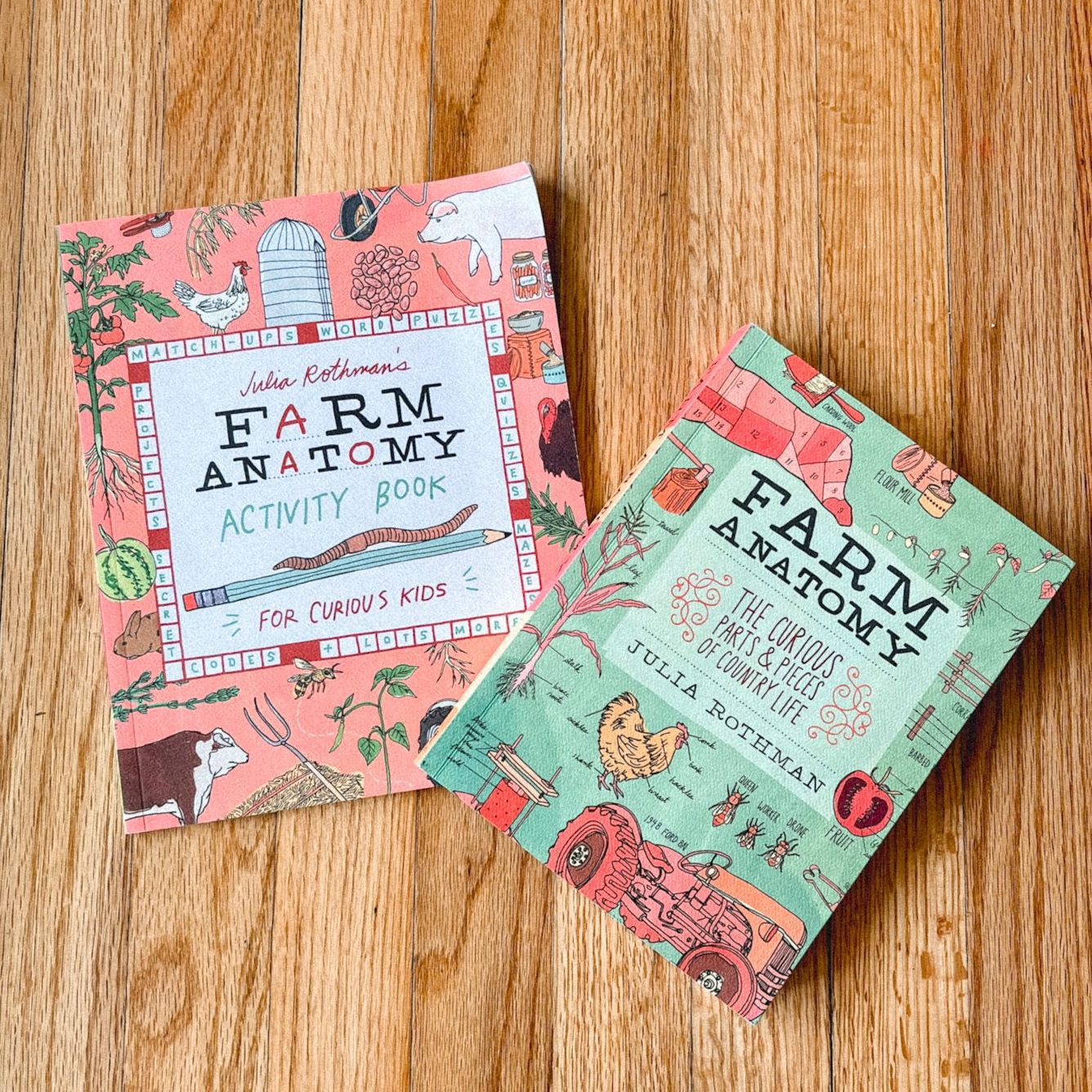
This book is not a typical textbook. It’s whimsical, illustrated, and full of labeled diagrams explaining:
- Parts of a chicken
- Types of apples
- Cuts of meat
- Farm tools
- Crop rotations
- Barn layouts
- Seed anatomy
- And so much more
It reads like a cross between a picture book and a reference guide — perfect for curious kids (and honestly? fascinating for moms too).
It naturally sparks rabbit trails, which I’ve come to appreciate as some of our richest learning moments.
The activity book turns everything into hands-on learning:
- Labeling diagrams
- Word puzzles
- Matching games
- Coloring pages
- Farm-based codes and activities
It’s low-prep for mom, but high-engagement for kids, which is exactly the sweet spot I’m always looking for.
How We Turned This Into a Farm Unit Study
You don’t need a complicated curriculum to build a meaningful unit study. Here’s how we’re using these books in our homeschool rhythm:
1. Morning Basket Reading
We read 2–4 pages from Farm Anatomy during Morning Basket.
Then we:
- Discuss what we learned
- Let the kids narrate back to me
- Look up anything that sparked curiosity
One day we ended up talking about soil composition. Another day, we discussed heritage breeds. None of it was forced — just natural learning.
2. Notebooking & Drawing
After reading, I have the kids:
- Sketch a labeled diagram
- Write 3–5 facts they remember
- Copy a definition in cursive
- Or narrate orally (for younger ones)
It easily covers:
- Science
- Nature study
- Vocabulary
- Handwriting
- Art
3. Real-Life Application
This is where homestead families get an extra blessing.
We’ve tied pages to:
- Our garden planning
- Seed starting
- Visiting a local farmers market
- Identifying cuts of meat when meal planning
- Talking about where our food actually comes from
Even if you live in town, you could:
- Visit a local farm
- Watch farm tours on YouTube
- Start a small container garden
- Raise backyard chickens
Farm life doesn’t have to be all or nothing.
Subjects This Unit Naturally Covers
This single book can stretch across so many subjects:
Science – plant anatomy, animal biology, soil, ecosystems
History – traditional farming methods
Economics – food systems, markets
Geography – regional crops
Math – crop rotation planning, livestock numbers
Language Arts – narration, copywork, vocabulary
And it all feels cohesive.
Why I Love This for Homestead Families
As someone building rhythms at home — baking from scratch, growing what we can, teaching our children alongside daily life — this book feels aligned.
It reinforces:
- Food awareness
- Stewardship
- Appreciation for manual work
- The beauty of seasonal living
It bridges our homeschool table and our kitchen counter.
And that’s really what I’m after.
Learning that connects to life.
Simple Weekly Farm Unit Plan (4 Weeks)
If you want structure, here’s a sample outline:
Week 1: Plants & Soil
- Read pages on seeds, soil, crops
- Start herb seeds
- Create a seed journal
Week 2: Animals
- Study chickens, pigs, cows
- Label animal anatomy
- Compare heritage vs commercial breeds
Week 3: Tools & Equipment
- Study farm tools
- Identify tools in your garage
- Draw and label parts of a tractor
Week 4: Food Systems
- Cuts of meat
- Farm to table discussion
- Plan a farm-inspired family meal
Keep it simple. Don’t overcomplicate it.
You don’t need a 200-page curriculum to teach your children well.
Sometimes all you need is:
- A beautiful book
- A curious child
- A slow morning
If your children are interested in farm life — or if you’re building a home centered around scratch cooking, gardening, and intentional rhythms — this is such a sweet addition to your homeschool.
Learning doesn’t have to feel separate from real life.
In fact, I think the best kind never is.
Author Profile

- Hello there, I'm Gabby! I'm a mom of four, married to my wonderful husband Marco, and I have a deep passion for simple living, vintage homes, and cooking everything from scratch! Although I grew up in Las Vegas, my husband's military service brought us to the east coast, where we have now made coastal North Carolina our home. While I didn't grow up on a farm, I have always been fascinated by that lifestyle and have dedicated my adult life to learning and embracing those skills, which I am excited to share with all of you!
Latest entries
 ☦️ Liturgical LivingNovember 3, 2026Living Liturgically Without Overwhelm: Finding a Gentle Rhythm in Orthodox Family Life
- ☦️ Liturgical LivingNovember 3, 2026November Orthodox Morning Board: 30 Days of Saints, Vocabulary & History
- FallOctober 20, 2026From-Scratch Pumpkin Pie with Fresh Milled Flour Crust
- Fresh-Milled FlourOctober 20, 2026Easy Fresh Milled Flour Pie Crust (Food Processor Method)