How to Convert Any Recipe to Fresh-Milled Flour (With Easy Charts + Tips)
Last Updated on January 21, 2026 by Gabby Hatten
Fresh-milled flour tastes deeper, more flavorful, and is more nutritious than store-bought all-purpose flour… but it doesn’t behave the same way in recipes. Because freshly milled wheat still contains the whole grain (bran, germ, and endosperm), it absorbs moisture differently, which can affect dough texture, rise, and the crumb of baked goods.
That’s why, instead of swapping flour straight across by volume, a little conversion goes a long way. Today I’m breaking it down for you with real conversion charts for soft and hard wheat plus practical guidance on how to adapt your favorite recipes, from sourdough bread to muffins and cookies, with confidence.
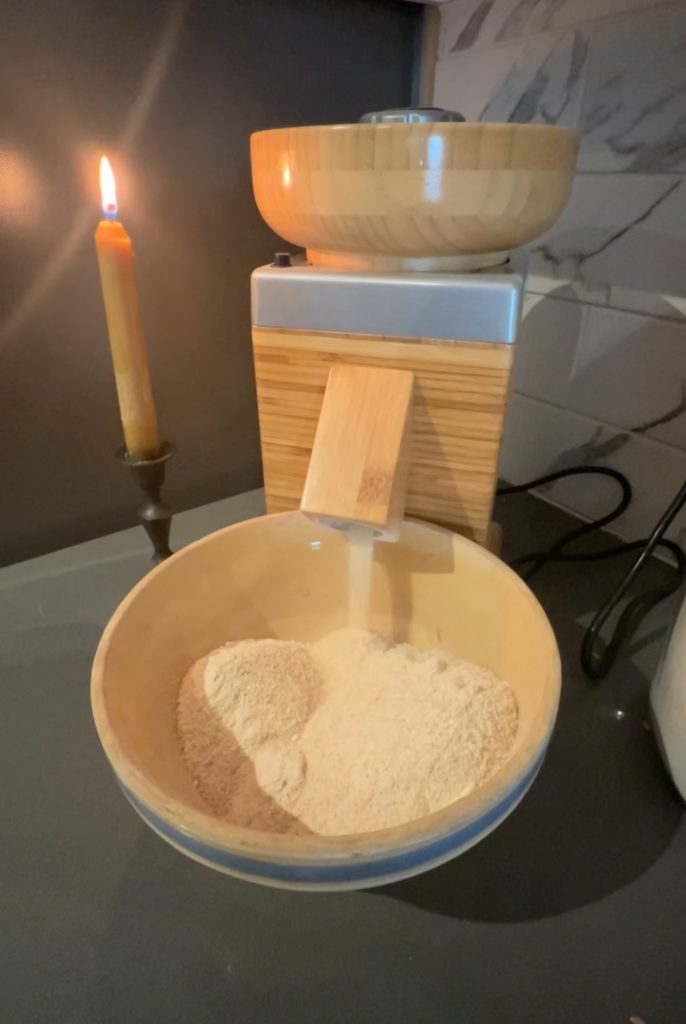
Why Fresh-Milled Flour Is Different
Freshly milled flour hasn’t been sifted of its bran and germ, so it:
- Absorbs more moisture than refined flour
- Has more oil and nutrients, which can affect dough feel
- Impacts gluten formation, especially in yeast breads and sourdoughs
This means baked goods can end up drier, denser, or more crumbly if you don’t adjust the flour amount or hydration.
Fresh-Milled Flour Conversion Chart
Soft Wheat (Best for Cakes, Pastries, Muffins)
| All-Purpose Flour | Soft Wheat (cups) | Soft Wheat (grams) |
|---|---|---|
| ¼ cup (30 g) | ¼ cup + 1 tbsp | 38 g |
| ⅓ cup (40 g) | ⅓ cup + 1 tbsp | 50 g |
| ½ cup (60 g) | ½ cup + 2 tbsp | 75 g |
| ¾ cup (90 g) | ¾ cup + 3 tbsp | 113 g |
| 1 cup (120 g) | 1¼ cups | 150 g |
| 2 cups (240 g) | 2½ cups | 300 g |
| 3 cups (360 g) | 3¾ cups | 450 g |
| 4 cups (480 g) | 5 cups | 600 g |
| 5 cups (600 g) | 6¼ cups | 750 g |
Hard Wheat (Best for Bread, Rolls, Pizza)
| All-Purpose Flour | Hard Wheat (cups) | Hard Wheat (grams) |
|---|---|---|
| ¼ cup (30 g) | ¼ cup | 30 g |
| ⅓ cup (40 g) | ⅓ cup | 40 g |
| ½ cup (60 g) | ½ cup | 60 g |
| ¾ cup (90 g) | ¾ cup | 90 g |
| 1 cup (120 g) | 1 cup | 120 g |
| 2 cups (240 g) | 2 cups | 240 g |
| 3 cups (360 g) | 3 cups | 360 g |
| 4 cups (480 g) | 4 cups | 480 g |
| 5 cups (600 g) | 5 cups | 600 g |
💡 Tip: If you’re measuring by weight (grams), hard wheat can often swap in 1:1 for all-purpose flour. Soft wheat generally absorbs more water and needs a bit more flour by volume and weight.
Step-by-Step Recipe Conversion
1. Convert By Weight First
If your recipe already lists flour in grams, the easiest way to convert is by weight. Simply grind enough grain to match the same grams of freshly milled flour — that’s your starting point.
For example: a recipe calling for 500 g all-purpose flour needs 500 g freshly milled flour if using hard wheat; for soft wheat, you’d use slightly more (refer to chart above).
2. Adjust Liquids Next
Fresh-milled flour absorbs more water, so you’ll often need to add extra liquid — typically 2–4 tablespoons per cup of fresh-milled flour — to achieve the same dough consistency.
3. Consider Gluten Development
Whole grain flour has more bran, which can interfere with gluten structure. For breads and doughs needing strong rise, you can:
- Use vital wheat gluten (1–2 tbsp per cup of flour)
- Allow for a longer rest before kneading or a short autolyse
4. Monitor Dough Feel
The best rule of thumb: start with adjusted flour and watch the dough feel. If it feels too dry, add liquid slowly; if too wet, add a little more flour.
Specific Baked Goods Tips
Yeast & Sourdough Bread
Start with the lower end of the flour range and allow the dough to rest after mixing so the bran softens. Fresh-milled bread dough can ferment quicker, so watch your rise times.
Quick Breads, Muffins & Pastries
Delicate items rely on the right balance of flour and fat. For pastries, increasing the volume of freshly milled flour helps maintain a tender crumb.
FAQs (Quick Answers)
Can fresh-milled flour replace all-purpose flour in any recipe?
Yes — with adjustments. If you mill by weight and add appropriate liquid, you can convert almost any recipe.
Does baking time or temperature change with fresh-milled flour?
Not necessarily — keep the same temperatures, but monitor baked goods as fresh flour’s moisture content may slightly affect timing.
How long does fresh-milled flour last?
It’s best used within a month if stored properly; store in a cool, dry place to preserve freshness and nutrients.
If you’re just starting out with fresh-milled flour, I want to gently encourage you: it truly is a learning curve, and that’s okay. My first few loaves were dense, crumbly little bricks. They still tasted good… honestly, even the “failed” loaves were delicious… but they definitely weren’t the beautiful, airy sourdough I had envisioned. What I learned through those early attempts was the value of patience. Fresh-milled flour needs time to fully absorb liquid. Letting the dough rest before mixing and kneading (and before adding more flour) made all the difference for me. Once I stopped rushing the process and trusted the rest period, my dough became softer, easier to work with, and I finally stopped adding too much flour out of habit. Like anything worthwhile, baking with fresh-milled grain takes practice, but with time and a little grace for yourself, it becomes second nature.
If you want to try your hand at a forgiving fresh-milled flour recipe, check out my sourdough fresh-milled flour waffle recipe.

Author Profile

- Hello there, I'm Gabby! I'm a mom of four, married to my wonderful husband Marco, and I have a deep passion for simple living, vintage homes, and cooking everything from scratch! Although I grew up in Las Vegas, my husband's military service brought us to the east coast, where we have now made coastal North Carolina our home. While I didn't grow up on a farm, I have always been fascinated by that lifestyle and have dedicated my adult life to learning and embracing those skills, which I am excited to share with all of you!
Latest entries
 ☦️ Liturgical LivingNovember 3, 2026Living Liturgically Without Overwhelm: Finding a Gentle Rhythm in Orthodox Family Life
- ☦️ Liturgical LivingNovember 3, 2026November Orthodox Morning Board: 30 Days of Saints, Vocabulary & History
- FallOctober 20, 2026From-Scratch Pumpkin Pie with Fresh Milled Flour Crust
- Fresh-Milled FlourOctober 20, 2026Easy Fresh Milled Flour Pie Crust (Food Processor Method)