Beginner’s Guide to Raising Ducks
Last Updated on May 18, 2026 by Gabby Hatten
What New Duck Owners Really Need to Know
Ducks are often advertised as “easier than chickens,” but the truth is they have very specific needs that many beginners completely miss. Unfortunately, a lot of common duckling health issues happen simply because people are given chicken advice instead of duck advice.
After raising ducks ourselves and learning through experience, there are a handful of things I wish every new duck owner knew from day one.
If you’re bringing home ducklings, this guide will help you avoid some of the most common beginner mistakes and set your flock up for a healthy start.
Ducks Are NOT Chickens
This is probably the most important thing to understand.
While ducks and chickens are both poultry, ducks have different nutritional needs, different waterproofing abilities, and different care requirements, especially as babies.
A duckling raised exactly like a chick can become very sick surprisingly fast.
The Most Important Duckling Nutrition Tip: Niacin
Ducklings require significantly more niacin (Vitamin B3) than chicks.
One of the biggest mistakes beginners make is feeding ducklings regular chick starter without supplementing extra niacin. Chick feed alone usually does not contain enough for healthy duck growth.
A niacin deficiency can lead to:
- Weak legs
- Bowed legs
- Trouble walking
- Sitting frequently
- Limping
- Growth issues
- Permanent mobility problems if untreated
Ideally, ducklings should receive:
- Duckling starter feed
OR - Chick starter supplemented with additional niacin
Duck Supplies Every Beginner Should Keep On Hand
There are a few things I personally consider essential for duck owners.
Brewer’s Yeast
Brewer’s yeast is commonly used to help supplement niacin for ducklings.
Many duck owners sprinkle it over feed daily if using chick starter instead of duck-specific feed.
Frozen Peas
Believe it or not, peas are often recommended as supportive care for ducks struggling with leg weakness or early niacin deficiency.
They are naturally high in niacin and ducks absolutely love them.
Warm thawed peas can also encourage a sick duck to eat.
Vitamin E + Selenium
Vitamin E deficiency can contribute to neurological problems like wry neck.
Some duck keepers keep:
- Vitamin E capsules
- Selenium supplements
- Selenium/Vitamin E gel
on hand for emergencies and supportive care.
Poultry Cell
Poultry Cell is a vitamin and mineral supplement many poultry keepers keep in their emergency kit.
It can help support ducks recovering from nutritional deficiencies or weakness.
Always follow dosage guidance carefully.
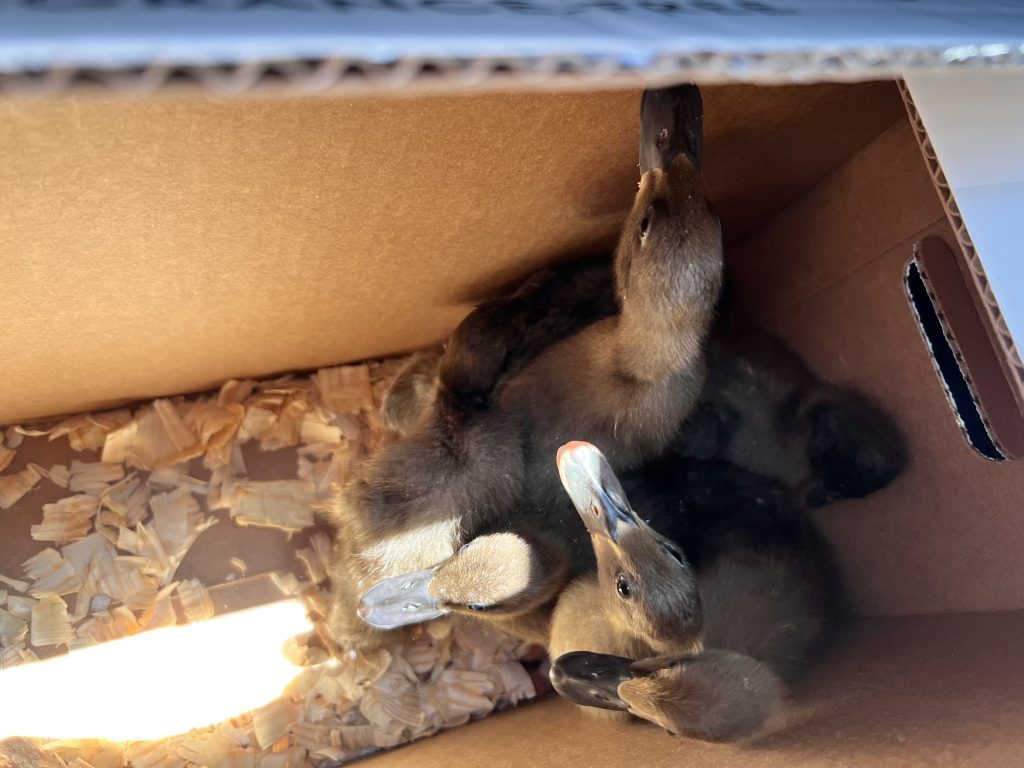
Ducklings Should NOT Swim Like Adult Ducks
This surprises a lot of people.
Yes, ducks love water naturally, but baby ducklings are not waterproof yet.
Adult ducks stay dry because of oils from their preen gland combined with mature feathers. Ducklings do not yet have fully developed waterproofing.
That means prolonged swimming can actually become dangerous.
Can Ducklings Swim at All?
Short, supervised dips in warm water are generally fine if:
- The room is warm
- The water is shallow
- They can easily get out
- They are dried thoroughly afterward
But ducklings should not:
- Be left in water unattended
- Become soaked/chilled
- Spend extended periods swimming
- Be exposed to cold temperatures while wet
Many experienced duck owners wait until adult feathers begin coming in before allowing regular swimming time.
Ducklings ALWAYS Need Deep Water for Their Bills
This is non-negotiable.
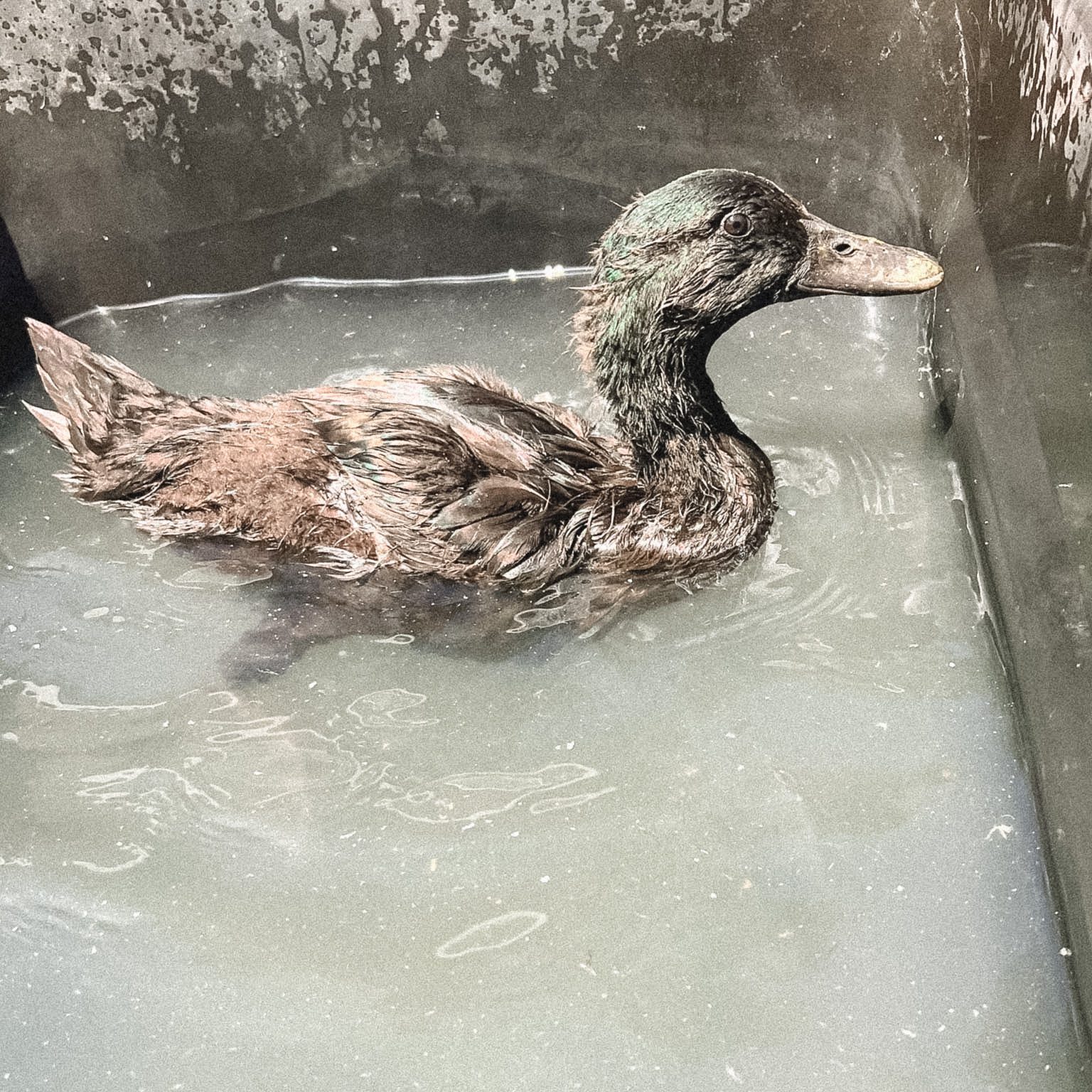
Ducks must be able to fully submerge their bills in water.
Why?
Because ducks clean their nostrils and eyes with water. Without sufficiently deep water they can develop:
- Impacted nostrils
- Eye irritation
- Difficulty eating properly
Even tiny ducklings need water deep enough to dunk their entire bill.
Just make sure the container is safe and shallow enough to prevent accidental drowning.
Common Duckling Health Problems
Niacin Deficiency
Symptoms
- Trouble walking
- Weak legs
- Bowed legs
- Sitting frequently
- Reluctance to move
What To Do
- Start niacin supplementation immediately
- Offer brewer’s yeast
- Feed niacin-rich peas
- Switch to proper duck feed if possible
- Reduce slippery surfaces
The earlier it’s caught, the better the outcome.
Wry Neck
Wry neck is a neurological condition where the duck struggles to hold its head upright.
Symptoms
- Twisted neck
- Head tilting backward
- Trouble balancing
- Difficulty eating/drinking
Supportive Care Often Includes
- Vitamin E
- Selenium
- Poultry vitamins
- Hydration support
- Reduced stress
- Neck support by making a gentle, soft ‘cast’ with gauze and a bandaid. Must change frequently.
Wry neck can have multiple causes including injury, nutritional deficiency, or genetics.
Hypothermia
Ducklings chill much faster than many people realize, especially after water exposure.
Symptoms
- Lethargy
- Weakness
- Shivering
- Wet/fluffed feathers
- Huddling constantly
What To Do
- Warm immediately
- Dry thoroughly
- Use a heat source safely
- Offer electrolytes if needed
Prevention is far easier than treatment.
A Few More Beginner Duck Tips
- Ducks are incredibly messy with water
- Wet bedding can quickly lead to unhealthy conditions
- Pine shavings are commonly used for bedding
- Avoid slippery flooring because leg injuries happen easily
- Ducks are social and do best with companions
- They grow shockingly fast
And perhaps most importantly:
Ducks are deeply emotional, intelligent little animals with huge personalities.
There is something so peaceful and joyful about raising ducks. Watching tiny ducklings discover water, follow you around the yard, and chatter excitedly at feeding time is one of the sweetest parts of homestead life.
But good care starts with good information.
A little preparation and understanding goes a very long way toward raising healthy, happy ducks.
And honestly? Once you have ducks, life is never quite the same in the best possible way.
Author Profile

- Hello there, I'm Gabby! I'm a mom of four, married to my wonderful husband Marco, and I have a deep passion for simple living, vintage homes, and cooking everything from scratch! Although I grew up in Las Vegas, my husband's military service brought us to the east coast, where we have now made coastal North Carolina our home. While I didn't grow up on a farm, I have always been fascinated by that lifestyle and have dedicated my adult life to learning and embracing those skills, which I am excited to share with all of you!
Latest entries
 ☦️ Liturgical LivingNovember 3, 2026Living Liturgically Without Overwhelm: Finding a Gentle Rhythm in Orthodox Family Life
- ☦️ Liturgical LivingNovember 3, 2026November Orthodox Morning Board: 30 Days of Saints, Vocabulary & History
- FallOctober 20, 2026From-Scratch Pumpkin Pie with Fresh Milled Flour Crust
- Fresh-Milled FlourOctober 20, 2026Easy Fresh Milled Flour Pie Crust (Food Processor Method)